
Nigeria Urges Marketers to Cut Fuel Pump Prices
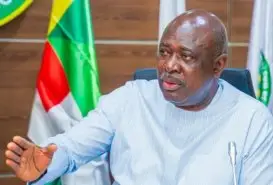
Nigeria’s Minister of State for Petroleum Resources, Senator Heineken Lokpobiri, has called on fuel marketers to immediately pass on the benefits of falling global crude oil prices to consumers at the pump.
Speaking after a stakeholders’ engagement convened by the Nigerian Midstream and Downstream Petroleum Regulatory Authority (NMDPRA), the minister warned that the deregulated downstream sector must not be used for profiteering.
Lokpobiri highlighted the mismatch between declining international oil prices and domestic petrol costs. “When Brent crude oil was $118, the price was rapidly going up. Now that the price has drastically decreased, why isn’t it coming down in the same way?” he asked during the meeting. Brent crude, which peaked above $118 per barrel earlier this year owing to geopolitical tensions, has since fallen sharply and traded between $69 and $72 per barrel in early July.
In Nigeria, petrol prices rose sharply during the earlier spike, reaching peaks of around N1,596 per litre in May 2026. While some moderation has occurred, current retail prices remain elevated and uneven. NNPCL outlets have adjusted to roughly N1,150 – N1,210 per litre in major cities such as Lagos and Abuja, while prices in other states, including Yobe, have stayed higher at around N1,395 per litre. Although ex-depot prices from suppliers including the Dangote Petroleum Refinery have been reduced in recent weeks, retail adjustments at filling stations have been slower and less consistent across the country.
The minister stressed that pricing involves multiple factors beyond crude costs, including exchange rates and logistics. He drew a clear line between legitimate replacement costs and windfall gains from inventory management. Temporary profits from fuel bought at higher prices should not justify keeping pump prices elevated once new stock is acquired at lower costs, he said. Lokpobiri directed the NMDPRA to strengthen market surveillance, enforce pricing transparency throughout the supply chain, and ensure consumers receive accurate fuel quantities.
Nigeria’s full removal of the fuel subsidy in 2023 under President Bola Tinubu ended decades of administered pricing. Combined with the ramp-up of domestic refining capacity, particularly at the Dangote Refinery, the market has shifted toward competition and import parity pricing under the Petroleum Industry Act 2021. While recent ex-depot reductions and NNPCL retail cuts have provided some relief, concerns remain that the full benefit of lower global crude prices has not yet reached motorists. Regulators, including the Federal Competition and Consumer Protection Commission, have flagged the current gap for closer scrutiny.
Lokpobiri expressed confidence that market forces will eventually correct the imbalance but reiterated that government institutions retain a statutory duty to protect consumers from exploitation. He called for continued dialogue between stakeholders to balance commercial viability with public interest.
