
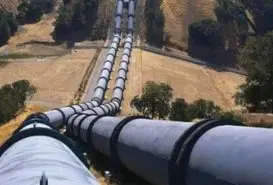
West African Leaders Sign Pact for $25 Billion Nigeria-Morocco Gas Pipeline
Leaders of the Economic Community of West African States (ECOWAS) have signed an intergovernmental agreement advancing the ambitious Nigeria-Morocco Atlantic Gas Pipeline (AAGP), a flagship $25 billion project aimed at transforming energy access across the region and strengthening links to Europe.
The pact was sealed during the 69th ECOWAS summit in Freetown, Sierra Leone on July 19, 2026. A joint statement by Morocco’s National Office of Hydrocarbons and Mines (ONHYM) and Nigeria’s NNPC Limited described the signing as a “decisive milestone” that shifts the project from planning to execution.
The proposed 6,900-kilometre pipeline will run along the Atlantic coast, transporting up to 30 billion cubic metres of natural gas annually. Roughly half the volume is intended for domestic and regional consumption in West Africa, with the remainder destined for Morocco and onward export to European markets. The route will connect Nigeria’s vast gas reserves through 13 coastal countries and extend benefits to landlocked Sahel nations.
The initiative originated from a 2016 vision between Morocco’s King Mohammed VI and Nigeria’s late President Muhammadu Buhari. Nigerian President Bola Ahmed Tinubu has sustained strong support. Technical, environmental, and legal studies have now been completed, paving the way for initial construction segments in the early 2030s.
Next steps include the creation of a project development company in Casablanca and a Pipeline Higher Authority in Abuja. A final investment decision is expected after mobilising international investors, with a formal signing ceremony planned in Morocco attended by President Tinubu.
ECOWAS Commission President Omar Alieu Touray hailed the pipeline as a catalyst for regional integration. “This project will enhance energy security, create jobs, drive industrialisation, and improve electricity access for millions,” he said.
The AAGP is positioned as a strategic bridge in Africa’s energy transition, supporting economic growth through natural gas while renewables are scaled up. Morocco views it as central to its Atlantic Initiative for deeper West African ties. For Nigeria, it offers a new route to commercialise associated gas currently flared in large volumes.
Challenges ahead include securing complex financing and addressing security along the multi-country route. Officials have already engaged potential partners, including in the United States.
Observers see the intergovernmental agreement as a major de-risking step that should attract commitments from multilateral lenders and private capital. If completed, the pipeline could supply electricity to over 400 million people and boost intra-African energy trade.
The development comes amid renewed global interest in African infrastructure and Europe’s efforts to diversify gas supplies. Construction timelines will depend on final engineering, environmental approvals, and offtake agreements, but the Freetown signing has injected fresh momentum into the long-discussed project.
