
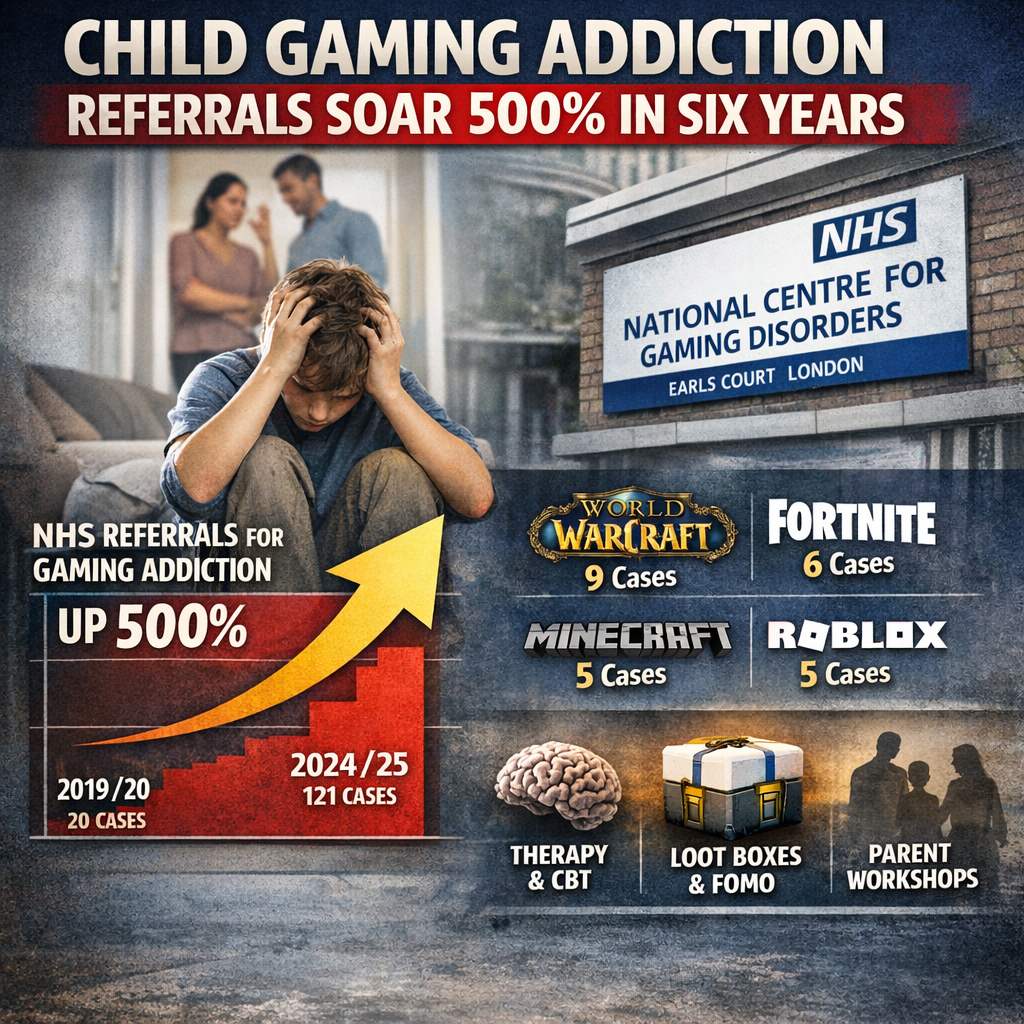
Number of Children Referred for Video Game Addiction Treatment on NHS Soars 500% in Six Years
The number of children and young people referred for specialist treatment for video game addiction on the NHS has risen by more than 500% in six years, according to new data released through Freedom of Information requests, per The Sun.
The figures highlight growing concerns over gaming-related harms among adolescents at a time when immersive online games and monetised digital ecosystems have become central to youth culture.
The National Centre for Gaming Disorders in Earls Court, London — the NHS’s dedicated treatment hub for gaming-related behavioural issues — received 121 referrals in the 2024/25 financial year. More than half of those referred (around 62%) were aged between 13 and 15. The majority went on to receive structured treatment.
By comparison, the centre handled just 20 referrals in 2019/20, the year before its current specialist service formally opened, illustrating the scale of the rise.
What counts as gaming disorder?
The centre, run by Central and North West London NHS Foundation Trust, treats young people diagnosed with “gaming disorder”, a condition recognised by the World Health Organization in 2018 and defined in the ICD‑11 classification system. It is characterised by:
- impaired control over gaming
- increasing priority given to gaming over other interests
- continued or escalating use despite negative consequences
Symptoms must persist for at least 12 months and cause significant impairment at home, at school or in social relationships.
Which games are involved?
Of the 2024/25 referrals:
- nine children were reported as primarily addicted to World of Warcraft
- six to Fortnite
- five to Minecraft
- five to Roblox
Clinicians cautioned, however, that most cases involved multiple games, reflecting broader patterns of compulsive digital behaviour rather than attachment to a single title.
Why referrals are rising
Professor Mark Griffiths, a behavioural addiction expert at Nottingham Trent University, said the sharp increase reflects both better clinical recognition and changes in gaming habits over the past decade. He told The Sun that constant online availability, immersive gameplay loops and increasingly aggressive monetisation are key contributors.
“Technology has played a role because if you’ve got those vulnerabilities and susceptibilities, you can be online all the time now,” he said. He warned that gaming’s shift towards microtransactions and paid in‑game content mirrors risks associated with gambling: “When you monetise something and you start spending a lot of money on that activity, that’s when problems can start to occur. And that is beginning to happen with video games.”
How the NHS treats gaming disorder
Treatment at the National Centre for Gaming Disorders is multidisciplinary and evidence‑based. It includes:
- individual and group therapy
- cognitive behavioural therapy (CBT)
- parent and caregiver workshops
- family therapy sessions
- strategies for controlled gaming
- rebuilding offline social and recreational activities
Underlying issues such as depression, anxiety, bullying or social isolation are often addressed as part of a wider support plan.
Professor Griffiths noted key warning signs of gaming disorder: declining school performance, strained relationships, withdrawal symptoms (irritability, anxiety, nausea or hand sweats) when unable to game, and continuing play despite clear harm. While recovery can be challenging, structured intervention is effective for many families.
Wider concerns and calls for action
Gaming disorder remains relatively rare in clinical terms, but the surge in referrals has fuelled wider public debate. Campaigners have renewed calls for:
- clearer age-verification measures
- stricter regulation of loot boxes
- improved parental controls
- increased industry accountability
- updated screen‑time guidance for schools
Specialists say the rise also reflects cultural shifts. The growth of esports, live‑streaming, social gaming on mobile devices and immersive online worlds has created highly engaging environments that can be difficult for vulnerable young people to regulate.
The National Centre for Gaming Disorders — the UK’s only specialist NHS clinic for gaming-related behavioural issues — now operates at full capacity, with waiting lists reported at various points since its launch.
Looking ahead
The newly released figures highlight the challenges of balancing a rapidly expanding gaming industry with public health priorities. As digital gaming continues to grow in reach, complexity and economic power, health experts argue that early intervention, parent education and harm‑reduction strategies will be essential.
The sharp rise in NHS referrals suggests not a moral panic, but a recognition of how modern gaming environments interact with adolescent vulnerability – and why policymakers, schools and the NHS are increasingly called upon to respond.
