
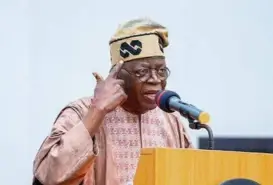
Tinubu Snubs South African Envoy as Diplomatic Tensions Rise Over Xenophobia
President Bola Ahmed Tinubu has declined to receive a special envoy dispatched by South African President Cyril Ramaphosa, amid escalating diplomatic friction over persistent xenophobic attacks against Nigerians and other African nationals in South Africa.
A South African delegation led by International Relations and Cooperation Minister Ronald Lamola arrived in Abuja on Friday, 24 July 2026, with what was described as a “very important message” for the Nigerian leader. Nigerian Foreign Affairs Minister Bianca Odumegwu-Ojukwu advised against granting an audience at this time, citing the continued violence against Nigerians, their businesses and properties. She further insisted that South Africa must first present a ratified copy of the Early Warning Mechanism Memorandum of Understanding signed by both countries in Abuja on 22 October 2025 before any high-level engagement could proceed.
The decision comes less than 24 hours after the reported killing of Nigerian national Chika Ibe, who was allegedly taken from his residence at Parksig Villas Complex in Bellville, Cape Town, and tortured to death by members of the South African Police Service. Nigeria has evacuated 1,490 of its citizens affected by previous waves of xenophobic violence and has repeatedly called for stronger continental measures.
At the recent ECOWAS summit in Sierra Leone, Vice President Kashim Shettima, representing President Tinubu, publicly condemned the attacks and pledged that Nigeria would push for firmer action at the African Union to protect the rights and dignity of Africans living across the continent.
Meanwhile, in Pretoria on Sunday, Minister Lamola struck a defensive tone. Responding to Ghanaian President John Mahama’s call for an African Union debate on migration-related violence in South Africa – which Mahama described as “escalating” – and to petitions by two Ghanaians to the International Criminal Court seeking an investigation into alleged repeated xenophobic attacks, Lamola rejected what he termed “cheap political point-scoring.”
“This debate that is being called by Ghana should not be a debate of finger-pointing and cheap political scoring against South Africa because it will not be helpful,” Lamola said at an inter-ministerial media briefing. “It should be a constructive engagement on migration. The root causes are the economic challenges that the continent faces, the challenges of lack of economic growth, unemployment, and so forth happening across the continent, and issues of governance, peace, and security that lead people to leave their own countries, including issues of climate change.”
Lamola’s remarks frame the crisis as a broader continental problem rather than a uniquely South African failure, even as Nigeria maintains that Pretoria has yet to ratify the 2025 Early Warning Mechanism designed to improve rapid communication, protect foreign nationals and facilitate compensation for victims. South African authorities have so far declined to compensate Nigerians whose businesses and properties were destroyed in previous attacks.
As of Monday morning, President Tinubu had not approved any meeting with the envoy. The outcome of a reported telephone conversation initiated by President Ramaphosa over the weekend remained unclear.
