
Moscow Announces Review of Military Planning in Response to UK and France Nuclear Arsenal Expansion
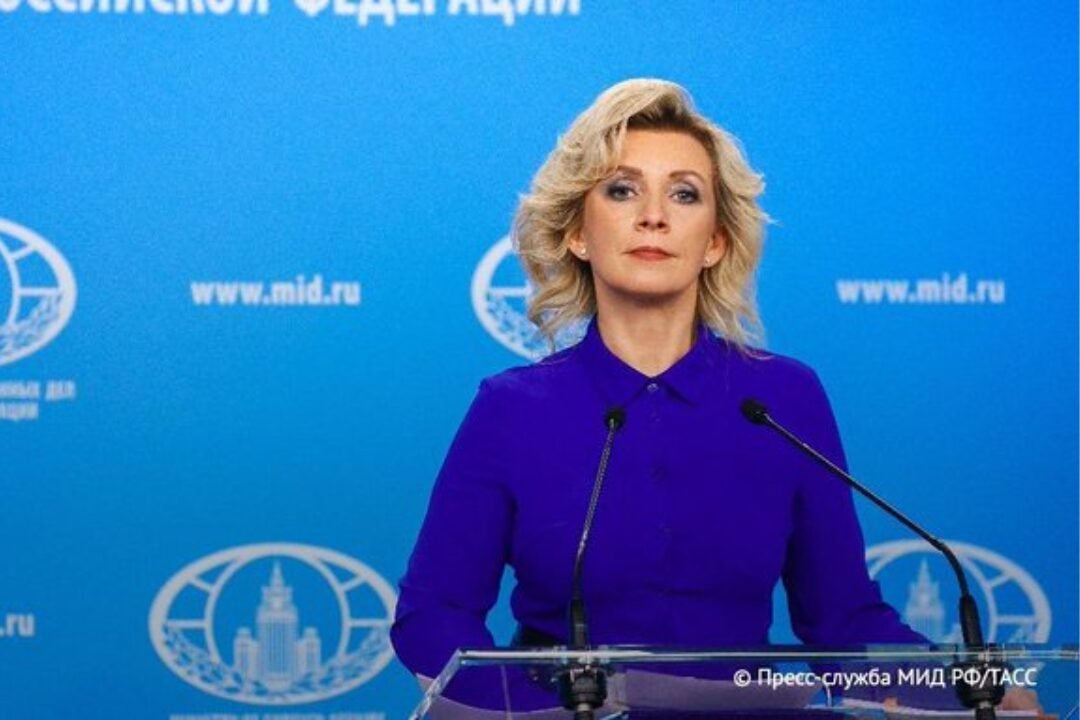
Russian Foreign Ministry Spokeswoman Maria Zakharova has stated that French and British plans to expand their nuclear capabilities necessitate strategic integration into Russia’s ongoing military planning and defense development.
Zakharova described the moves as occurring outside international restrictions and warned that NATO countries are increasingly coordinating on potential nuclear use decisions directed against a “common enemy.”
Speaking at a regular news briefing in Moscow, Zakharova highlighted recent statements by French President Emmanuel Macron, who on March 1, 2026, revealed that eight European nations – Germany, the United Kingdom, Poland, the Netherlands, Belgium, Greece, Sweden, and Denmark – had expressed interest in cooperating with France on joint nuclear deterrence. She framed this as a deepening of NATO’s collective nuclear posture.
“Uncontrollably expanding NATO capabilities in the military-nuclear sphere require increased attention and careful consideration in our own military development and planning,” Zakharova said. She added that NATO’s longstanding designation of Russia as an adversary – often emphasized in public statements and strategic documents – is of “fundamental importance” from Moscow’s security perspective.
Russian Foreign Minister Sergey Lavrov echoed the concern a day earlier, stating that the risk of nuclear proliferation spiralling out of control is rising. Lavrov’s remarks followed Macron’s announcement and came amid heightened regional tensions following the US-Israel military campaign against Iran that began in late February 2026.
The UK has maintained a continuous at-sea nuclear deterrent since 1969 via its Vanguard-class submarines armed with Trident II D5 missiles, with the government confirming in 2025 a commitment to maintain at least 120 operational warheads and plans to build four new Dreadnought-class submarines to replace the ageing Vanguard fleet. France operates a dual sea- and air-based deterrent, with approximately 290 deployed warheads on Triomphant-class submarines and Rafale aircraft, and President Macron has repeatedly offered to extend France’s nuclear umbrella to willing European partners as a complement to NATO’s collective defence.
Zakharova’s comments reflect Moscow’s long-standing position that NATO nuclear sharing arrangements and modernisation programmes undermine strategic stability. Russia has previously cited the deployment of US B61 gravity bombs in five NATO countries (Belgium, Germany, Italy, the Netherlands, and Turkey) and the planned modernization of those weapons as direct threats to its security.
The remarks come against the backdrop of Russia’s own ongoing nuclear modernization, including the deployment of Avangard hypersonic glide vehicles, Sarmat ICBMs, and Poseidon nuclear-powered underwater drones, as well as periodic updates to its nuclear doctrine. In November 2024, Russia revised its nuclear-use policy to lower the threshold for potential first use in response to conventional attacks threatening the existence of the state.
No immediate official response from London or Paris has been issued to Zakharova’s statements. The UK Ministry of Defence reiterated on March 3 that Britain’s nuclear deterrent remains a minimum credible capability focused on deterrence, while the French Foreign Ministry described Macron’s proposal as a contribution to European strategic autonomy within the NATO framework.
