
Uganda Declared Ebola-Free After Containing Imported Outbreak
Uganda has officially been declared free of Ebola, Health Minister Dr Chris Baryomunsi announced on Tuesday, marking the successful end of a limited 2026 outbreak fully linked to imported cases from the neighbouring Democratic Republic of the Congo.
The declaration followed the completion of the mandatory 42-day monitoring period required under World Health Organization guidelines. That countdown began after the discharge of the last Ugandan national infected through local transmission on 16 June 2026. Intensive nationwide surveillance during the period detected no new cases and no unexplained community transmission.
“Uganda is officially Ebola free,” Baryomunsi stated in the announcement delivered at the Uganda Media Centre. He emphasised that, unlike previous outbreaks that shaped the standard 42-day policy, the 2026 event “arose from a fully documented importation event.” The source of infection was identified, the route of introduction established, all confirmed cases epidemiologically linked, transmission chains completely characterised and reconstructed, and all identified contacts institutionally quarantined. Every contact completed the mandatory 21-day follow-up without evidence of further spread.
The outbreak was first declared on 15 May 2026, the same day authorities in the DRC announced their own epidemic. Uganda recorded a total of 20 confirmed cases of Bundibugyo ebolavirus. Of these, 15 were imported infections involving Congolese nationals who had crossed the border seeking care, while five occurred among Ugandan health workers and support staff who cared for the patients. Official Ministry of Health figures list zero current admissions and note that 821 of 831 listed contacts completed follow-up.
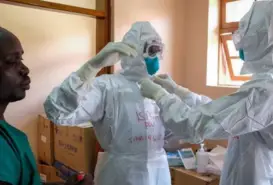
Health officials credited rapid molecular testing, genome sequencing, digital surveillance tools, real-time contact tracing and institutional quarantine for containing the outbreak with minimal secondary spread. Enhanced screening continued at points of entry, with thousands of travellers checked. Authorities have maintained heightened vigilance along border communities from West Nile to Kisoro and continue public education on symptoms such as fever, vomiting, diarrhoea and unexplained bleeding.
The successful containment stands in sharp contrast to the situation across the border. The DRC is battling one of its largest and fastest-growing Ebola outbreaks on record. As of late July, Congolese health authorities have reported more than 3,260 confirmed cases and over 1,430 deaths, concentrated primarily in Ituri province but with spread into North Kivu, Haut-Uele, South Kivu and Tshopo. Uganda has entered a joint cross-border response arrangement with the DRC to support containment efforts while protecting its own borders.
Uganda has faced multiple Ebola outbreaks since 2000 and has built substantial expertise in rapid detection and response. The relatively low case fatality rate in this outbreak (around 10 percent) and the absence of sustained community transmission underscore the effectiveness of those systems. The Ministry of Health and the Ministry of Tourism have both stressed that Uganda remains open and safe for travel, business and tourism.
Baryomunsi and other officials have urged the public to remain alert, continue observing basic public health measures and report any suspected cases promptly through the toll-free Ministry of Health line or designated alert channels. While the formal outbreak is over inside Uganda’s borders, the proximity of the large ongoing epidemic in the DRC means sustained surveillance and preparedness remain essential.
The declaration closes a chapter that began with two confirmed cases in mid-May and demonstrates how documented importation, aggressive contact management and coordinated national response can interrupt transmission even when a neighbouring country faces a major epidemic.
