
UNESCO Deploys Emergency Measures to Protect Education, Culture and Journalists as Middle East Violence Persists
UNESCO has begun rolling out emergency support across the Middle East as violence escalates, focusing on protecting education personnel and institutions, safeguarding cultural professionals and at-risk heritage sites, and reinforcing the safety of journalists operating in the conflict zones.
While discussions with Member States continue to refine and expand interventions, several concrete activities are already underway on the ground.
Tens of millions of children across the region are facing severe disruption to their education, with many schools damaged, closed, or repurposed as shelters. To date, at least 65 schools have been damaged, and attacks on educational facilities and universities have resulted in fatalities among both teachers and students.
In response, UNESCO is providing emergency assistance to establish temporary learning spaces, strengthen online teaching capacity, and distribute learning kits so displaced students can continue their education remotely. The organisation is also offering guidance and resources to promote mental health, well-being, and resilience among students, teachers, and parents, stressing that psychological safety is a fundamental prerequisite for effective learning, as stress and trauma significantly impair memory, attention, motivation, and social cohesion.
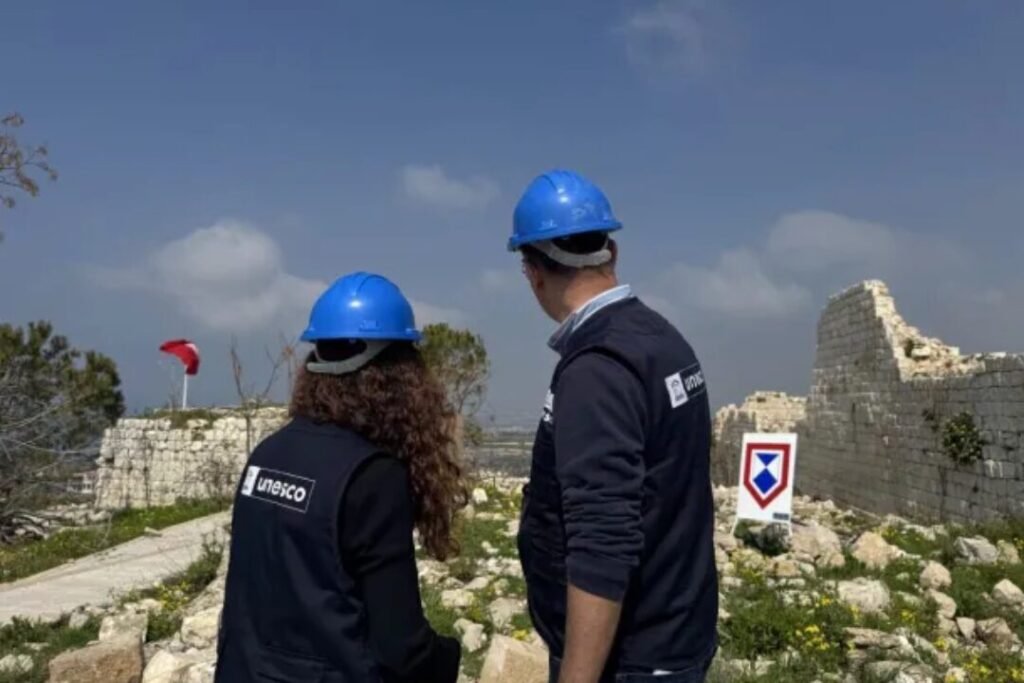
UNESCO has pledged to scale up psychosocial support to all countries that request it.On the cultural front, UNESCO has activated an emergency programme to support cultural professionals and protect heritage in affected countries. In Lebanon, for example, work is already underway to transfer and safely store artefacts from archaeological sites to secure locations following the recent intensification of violence. The organisation will expand online training for heritage professionals and authorities responsible for combating illicit trafficking of cultural property, while simulation exercises will help museums and cultural institutions prepare for emergencies.
Satellite monitoring and field reports indicate damage to several World Heritage properties and numerous other culturally significant sites, with many more at high risk due to their proximity to active hostilities. UNESCO has already shared the coordinates of all protected sites with relevant parties and stands ready to conduct on-site assessments as soon as conditions permit. It will continue assisting national authorities in documenting damage, securing sites, and protecting collections, including stabilising structures and safeguarding museums and archaeological holdings.
UNESCO has also reiterated its strong condemnation of attacks on education and cultural sites, reminding all parties of their obligations under international law, including the 1954 Hague Convention, the 1972 World Heritage Convention, and relevant UN Security Council resolutions such as 1738 (2006), 2222 (2015), 2601 (2021), and 2347 (2017).
The Middle East is home to around 125 UNESCO World Heritage sites across 18 countries, representing nearly 10% of all World Heritage properties globally, along with rich intangible heritage that embodies the region’s history, identity, and shared humanity.
In addition to education and culture, UNESCO is preparing interventions to strengthen scientific cooperation on water supplies and enhance monitoring of the situation facing journalists and media facilities, who are operating under extreme pressure amid rising misinformation and disinformation.
UNESCO has called for increased international mobilisation and funding to scale up these emergency interventions. The organisation urged all parties to exercise maximum restraint and take every possible measure to spare education, culture, media, science, and the environment – elements it described as the pillars of stable and resilient societies.
