
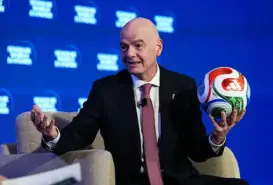
UEFA Threatens World Cup Boycott as FIFA Moves to Privatise Commercial Rights
A major rift has erupted between world football’s governing bodies after FIFA confirmed plans to create a multi-billion-dollar commercial subsidiary and sell minority stakes to private investors, prompting UEFA and its member associations to prepare emergency discussions that could include the threat of a boycott of future World Cups.
On Tuesday, FIFA announced the formation of FIFA Forward Enterprise, a new subsidiary valued at approximately $20 billion that would consolidate the commercial rights and operational delivery of its flagship competitions, including the men’s and women’s World Cups and the Club World Cup. Under the proposal, FIFA would sell minority, non-controlling stakes (reported at up to around 20-21 per cent) to external investors, aiming to raise up to $4.2 billion.
FIFA has framed the initiative as a means to expand football development funding to more than $10 billion, subject to approval by its member associations. The capital would support a sharp increase in payments to its 211 members, including one-off payments of $20 million each and higher annual distributions. The governing body insists it would retain majority ownership of the new entity and exclusive control over all governance, sporting, regulatory and calendar decisions.
JPMorgan is advising FIFA on the project. The lead investor group is expected to be headed by Thrive Eternal, linked to Thrive Capital and American investor Joshua Kushner. FIFA has stated that Jared Kushner is not an investor.
The announcement triggered an immediate and strongly worded response from UEFA. European football’s governing body declared that the move “crosses a line that football’s governing institutions should never cross” and argued that the soul and governance of football are not assets to trade, especially with limited transparency on who gains financially.
UEFA’s 55 member associations are expected to hold a virtual emergency meeting this week to coordinate their response. Sources indicated a willingness among European nations to discuss using the threat of a boycott of FIFA competitions – potentially including the 2027 Women’s World Cup in Brazil or future men’s tournaments, if the plans proceed without significant concessions.
The Football Association in England said it had not been consulted before the proposals became public. UK Prime Minister Andy Burnham criticised the initiative, stating that the World Cup “is not a product” and that selling a piece of it would amount to selling out, emphasising that football belongs to the fans.
FIFA maintains the proposal will strengthen the game globally by redistributing greater resources, particularly to associations outside Europe. The plans require approval from a majority of the 211 member associations.
The timing is sensitive. The proposal emerged just days after the conclusion of the expanded 48-team 2026 World Cup, a tournament that generated record revenues but also heightened existing tensions between FIFA and UEFA over calendar congestion, commercial priorities and governance.
European associations hold significant sporting weight but represent only about a quarter of FIFA’s membership. Whether a credible boycott threat materialises, or whether the plan can be amended or blocked through internal processes, will become clearer after this week’s emergency talks.
The dispute underscores deeper struggles over who controls the commercial future of the world’s most popular sport and how its wealth should be distributed.
