
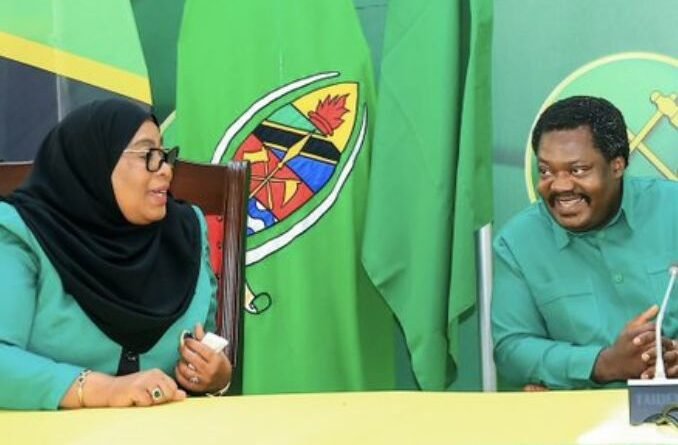
Tanzanian Vice President Resigns Abruptly
Tanzanian Vice President Dr. Emmanuel John Nchimbi formally resigned on Tuesday, August 25, less than ten months after taking office, becoming the first vice president in the country’s post-independence history to step down voluntarily while in office.
Nchimbi, 54, submitted a letter to President Samia Suluhu Hassan stating that he had decided to retire from politics and public service. The resignation takes effect on September 4. In a public notice issued by the Office of the Vice President in Dodoma, he cited Articles 50(2)(c) and 149(2) of the Constitution and referenced a personal pledge he made on August 27, 2025, before becoming her running mate. “I am fully satisfied, without any doubt, that Her Excellency the President desires change, and thus I have decided to fulfil my promise,” he wrote.
President Hassan has accepted the resignation, with Chief Secretary Moses Kusiluka confirming that constitutional procedures to fill the vacancy would begin immediately. Under the constitution, the president must appoint a successor within 14 days, with the nomination requiring parliamentary approval. Parliament was scheduled to begin a session on August 26.
Nchimbi was sworn in on November 3, 2025, following Hassan’s landslide victory in the October 2025 general election, in which he served as her running mate. His tenure lasted roughly 295 days.
The announcement carries a sharp irony. Just days earlier, on August 19, the Information Services Department suspended the independent Kiswahili weekly MwanaHALISI for six months over a report in its August 6 – 12 edition headlined “Nchimbi agoma kujiuzulu” (“Nchimbi rejects calls to resign”). Authorities cited breaches of accuracy, balance and verification standards under the Media Services Act of 2016, including reliance on unnamed sources, failure to obtain comment from Nchimbi, and an editorial error that misidentified a photograph. The newspaper has 30 days to appeal. Media stakeholders have described the suspension as part of a broader pattern of regulatory pressure on independent journalism in Tanzania, which ranks 117th out of 180 countries in the latest Reporters Without Borders World Press Freedom Index.
The resignation comes amid reports of internal tensions within the ruling Chama Cha Mapinduzi party and government. Early August media reports had alleged that Nchimbi faced pressure to step down amid differences with the president.
Nchimbi’s political career spans decades within the ruling party. Born on December 24, 1971, in Mbeya Region, he rose through the party’s youth wing, served as a district commissioner, Member of Parliament for Songea Town, and held cabinet posts including Minister of Home Affairs. He later served as ambassador to Brazil and Egypt before returning as CCM Secretary-General in 2024 and being selected as Hassan’s running mate. During his brief vice presidency he publicly called for a new constitution and engaged on issues ranging from human rights defenders to cooperative audits. In his resignation statement he thanked the president, the ruling party and the Tanzanian people, affirming he would remain a “good citizen.”
The sudden exit leaves President Hassan to select a new deputy less than a year into her new term. Attention now turns to potential successors and whether the process will signal continuity or a significant political recalibration. For Tanzania’s media landscape, the sequence of events—from the newspaper’s report to its suspension and the subsequent resignation—has reignited debate over the boundaries of press freedom and the risks of reporting on sensitive leadership matters.
