
UN Meets as Haiti Violence and Deportations Rise
The United Nations Security Council convened an emergency session on Friday to discuss a deadly spike in gang attacks in Haiti, as the United States continued deportation flights into a country already gripped by insecurity.
On 23 August, gangs killed at least 47 people, injured 22 others and kidnapped more than 52 people in Kenscoff, near Port-au-Prince. According to the latest report of the UN Integrated Office in Haiti (BINUH), 1,408 people were killed and 656 injured in gang-related violence between 1 April and 30 June, while 326 people were subjected to sexual violence in the same period.
The UN Human Rights Office said illicit flows of firearms and ammunition continued to bolster armed groups despite a Security Council arms embargo in place since 2022. Reports indicated a gang operating in Port-au-Prince displayed on social media what appeared to be a new shipment of weapons arriving from abroad.
To address the violence, the Council had previously authorised a multinational security support mission in 2023 and a new gang suppression force in 2025. The emergency meeting was called to hear the latest developments as attacks on civilians intensified.
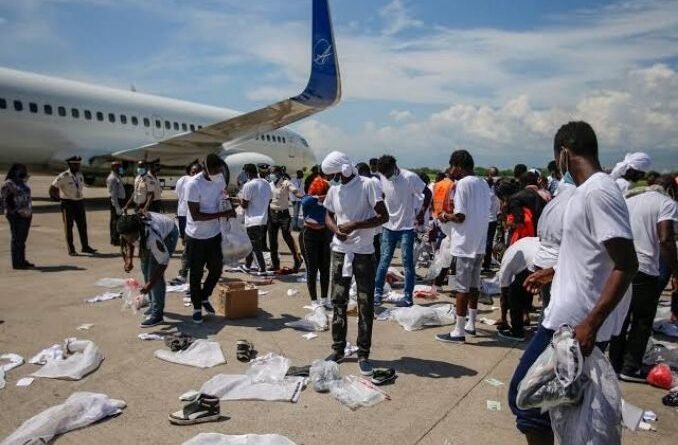
In parallel, more than 50 people were deported from the United States to Haiti on Thursday, arriving in the northern city of Cap-Haïtien because Port-au-Prince’s main airport is considered too dangerous. Haiti’s National Office of Migration said the flight included two minors. It was the second US deportation flight to Haiti since Temporary Protected Status ended for some 350,000 Haitians living in the United States. An earlier flight on 20 August carried more than 160 people.
Among those on Thursday’s flight was Jay Dabelus, a professional boxer born in the Bahamas who said he had never lived in Haiti and spent more than two decades in the United States. “I don’t know anything about Haiti,” he said after landing, adding that he had no family or resources there.
Several deportees covered their faces after arrival, reflecting security fears in a country many have little or no connection to. The deportations come days after the Kenscoff attack and continued gang control of large parts of the capital and surrounding areas.
Haiti remains one of the most severe security and humanitarian crises in the Western Hemisphere. Armed groups have expanded their reach, displaced communities and disrupted essential services. International efforts to suppress the gangs have so far failed to restore lasting stability, leaving both residents and newly arrived deportees exposed to the same threats.
