
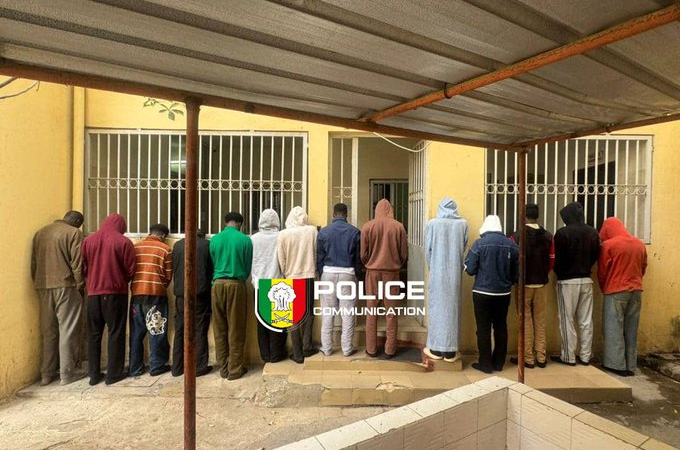
Senegal Dismantles French-Linked Paedophile Network: 14 Suspects Face Dakar Court
Senegalese police have dismantled a transnational criminal network involved in the sexual exploitation of children, leading to the arrest and court appearance of 14 suspects in Dakar.
The operation, announced by the National Police on February 9, 2026, targeted a group active since 2017 that operated primarily between Senegal and France.
The suspects, all Senegalese nationals, were brought before a judge on Friday, facing serious charges including organized paedophilia, pimping, rape of minors under 15 years old, unnatural acts (sodomy), and intentional transmission of HIV/AIDS. The network allegedly recruited and abused young boys, forcing them into unprotected sex with men – mostly HIV-positive – and filming the acts for distribution or profit.
Four of the accused are believed to have acted “on the instructions” of a Frenchman arrested in France in April 2025, in exchange for money transfers. Coordinated raids were conducted in several Dakar neighbourhoods and in Kaolack, 200 km southeast of the capital. Items linked to the alleged crimes were seized during the searches.
The Division des Investigations Criminelles (DIC) described the operation as a major blow to organized crime threatening children and public health. In a statement, the National Police affirmed: “The National Police is tracking down networks threatening our children and public health.”
The arrests followed collaboration with French authorities, including the participation of a French police delegation in the mission. Investigations continue to fully dismantle the network. The police have urged the public to report any relevant information via a dedicated toll-free number and vowed to pursue similar criminal groups.
Similar Networks Across West Africa
The Senegal case is not isolated. West Africa has seen a rise in transnational child exploitation networks, often linking local recruiters to European-based perpetrators through digital platforms and cross-border travel.
The operation highlights growing regional awareness, but child protection advocates warn that high poverty rates and digital penetration create fertile ground for such networks unless intelligence sharing is further strengthened.
