
Sonko Calls for Dialogue with President Faye After Rift, Pledges Conditional Support for New Government
Ousmane Sonko, the influential leader of the PASTEF party and newly elected Speaker of Senegal’s National Assembly, has urged President Bassirou Diomaye Faye to engage in “intelligent and constructive political dialogue” to prevent the country from sliding back into crisis, just days after the formation of a new technocratic government that his party has chosen to boycott.
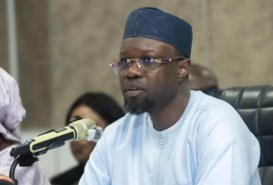
Speaking at a widely anticipated press conference in Dakar on Tuesday evening, June 2, 2026, Sonko addressed for the first time the dramatic events of recent weeks, including his dismissal as Prime Minister by Faye on May 22. He described a private meeting at the presidential palace in which Faye told him that some of Sonko’s recent public positions had become problematic. Sonko said he accepted the decision without resistance, even facilitating a smooth handover, after previously offering to resign voluntarily and return to parliament to support the president.
Sonko sharply criticised the new 30-member cabinet announced on June 1, saying it lacked “serious political legitimacy” and had been formed too lightly. PASTEF, which controls around 130 of the 165 seats in the National Assembly, has decided not to participate in the government. However, in a significant gesture of restraint, Sonko said his party would not seek to censure or topple it. “We are here to support him so that he succeeds,” he said, adding that PASTEF would “accompany” the government in the higher interests of Senegal to avoid scaring off investors and destabilising the country.
The former prime minister acknowledged the current situation as a form of cohabitation, noting that President Faye “does not have a single deputy in the National Assembly” and “does not have all the powers.” He urged Faye to “come down from his pedestal and we need to talk,” while stressing that both sides must put Senegal’s interests first. Sonko also called on the country’s youth to remain calm despite alleged provocations in recent days.
The press conference, broadcast live on several Senegalese channels, was calm and professional. Sonko’s remarks come at a delicate moment for Senegal. The once-close alliance between Faye and Sonko, which delivered a landslide victory in the 2024 presidential election on promises of systemic change and sovereignty, has fractured over differences on economic policy, debt management and governance approach. Public debt has risen above 130% of GDP, and negotiations with the IMF remain stalled, adding urgency to the need for stability.
Sonko’s decision to support rather than obstruct the new government led by technocratic Prime Minister Ahmadou Al Aminou Mohamed Lo, appears aimed at projecting responsibility while maintaining PASTEF’s strong parliamentary leverage. Informed observers say it reduces the immediate risk of political paralysis but leaves underlying tensions unresolved.
President Faye is expected to chair the first Council of Ministers meeting with the new cabinet on June 5. How the two camps navigate their relationship will have major implications for investor confidence, economic reforms and Senegal’s political stability in the months ahead.
