
Tinubu Declares Reform Over, Prosperity Next
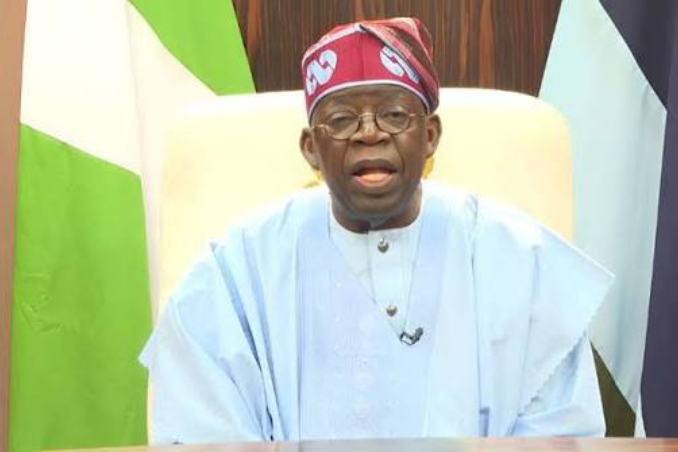
President Bola Tinubu has told Nigerians on the country’s 66th Independence Day that the emergency phase of his economic reforms is finished and that the task now is “shared and widespread prosperity,” urging the country not to return to what he called the morphine of subsidies.
In an address titled “From Reform to Prosperity,” he claimed that by 2023 poverty was rising and hope nearly gone, and that previous governments had treated symptoms while “the disease” took hold. He compared Nigeria to a patient with cancer who had been offered only pain relief. “For too long, Nigeria’s leaders chose morphine while praying for a miracle that never came.” The reforms that followed, he said, were painful but did not create the weaknesses they confronted. He warned against “influential but regressive voices” calling for a return to “addictive subsidies.”
He listed what he presented as evidence of a turn. The economy had grown by over 4 percent this year, with both oil and non-oil sectors contributing and oil theft down. Foreign reserves had been rebuilt and the exchange market stabilised. In 2025, he said, non-oil exports exceeded $6 billion, the highest on record, “real money being made by real Nigerian businesses.”
According to the President, journalists, NGOs and multilateral institutions had concluded that the reforms strengthened stability, and that foreign direct investment was rising each year.
Prosperity, he said, was not a larger set of statistics. He described a country in which farmers could work safely and earn a return, factories had power, businesses could get credit, young people could find work, and food, transport and education were within reach. The route to a lower cost of living, he argued, was cheaper production and movement: mechanised irrigation and dry-season farming, seeds and fertiliser, storage, and roads, railways and ports linking farms and factories to markets. Savings along that chain, he said, would show up in prices.
On jobs he promised to use gas to power industry, revive factories, extend digital connectivity and train people for the work employers want. He said millions still could not wait for that economy. Their hardship, he argued, predated the last three years and could not be erased in four. Direct support for the poorest would be strengthened and the National Social Register improved. The Nigerian Education Loan Fund, he said, was meant to keep higher education open to low-income families, and CREDICORP to give working Nigerians credit for vehicles, solar systems and devices. With states and local governments, primary healthcare and basic education would be reinforced. Salaries and pensions, he said, had been paid on time and in full since 2023, and the pension programme reformed.
“The age of reform has done its work. Now begins the age of prosperity.” He closed with a biblical image: Nigeria had “passed through our own Red Sea” and should not look back.
