
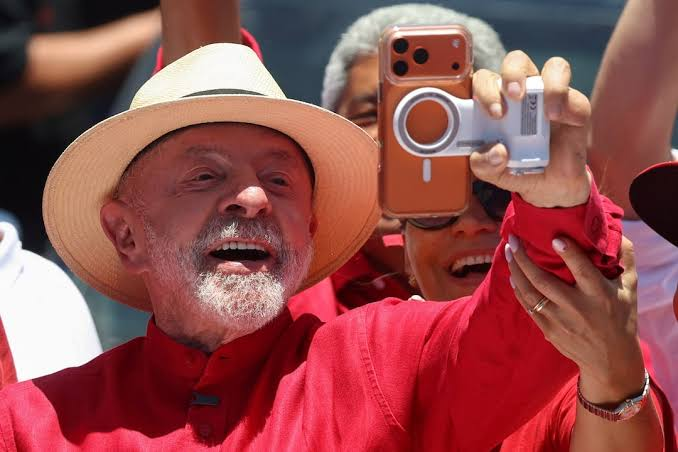
Musk Casts Doubt on Lula’s Win
Elon Musk has lent his voice to a growing challenge to Brazil’s presidential runoff, after Flávio Bolsonaro refused to accept defeat by President Luiz Inácio Lula da Silva and vowed to ask the courts to annul a result decided by roughly 4.4 million votes.
There is no verified evidence of fraud in the count. The dispute bothers on a last-minute order that kept polling stations open for two extra hours.
Brazil’s Superior Electoral Court (TSE) declared Lula the winner late on Sunday with 51.79 per cent of valid votes, about 64 million, to Bolsonaro’s 48.21 per cent, about 60 million. It is the first time since direct presidential elections returned in 1989 that a candidate who lost the first round has won the runoff. Bolsonaro had led the 4 October first round by 47.03 per cent to 45.16 per cent. Lula, who turns 81 this week, will begin a fourth term in January 2027.
The extension was ordered by Supreme Federal Court Justice Cristiano Zanin as polls were about to close at 5pm Brasília time. Lula’s campaign had asked for more time after bus failures in nine states, including São Paulo and Salvador, and Bolsonaro’s side had also sought an extension. Bolsonaro’s request cited heavy rain in the south, where he was favoured. Zanin was Lula’s criminal defence lawyer before Lula appointed him to the court in 2023. He later clarified that the order applied only where polls were still open, and some stations had already switched off their voting machines and could not reopen. Bolsonaro’s allies said electoral matters belong to the TSE, not the Supreme Court, and ally Nikolas Ferreira pointed to Zanin’s past as Lula’s lawyer.
Bolsonaro said it was impossible to recognise the result in the circumstances. He argued that the order was applied unevenly and undermined equal voting conditions, and said he would seek annulment in court. His father, Jair Bolsonaro, who is now in prison, also refused to accept defeat by Lula in 2022, by a narrower margin.
Musk entered the debate on Monday. He replied “Wow” to a thread by lawyer Martin De Luca, who argued that Zanin’s extension left closed machines closed and that a victory speech was no substitute for an explanation. He also shared a calculation questioning how the first-round and runoff figures fit together, adding that the numbers “don’t add up.” Musk has long clashed with Brazil’s judiciary over X, and has accused Justice Alexandre de Moraes of election interference.
Lula’s tally rose by more than 10 million votes between rounds, while Bolsonaro’s rose by about 3.7 million, out of an estimated 14 million additional or redistributed ballots. Those came from eliminated candidates, from a fall in abstention from 21.08 per cent to about 19.2 per cent, and from fewer blank and null votes.
Informed observers attribute the swing to stronger turnout among Lula’s base, who tend to face greater transport barriers, to heavy mobilisation in the Northeast, to gains in Minas Gerais, and to the redistribution of third-party support. Pre-election polls had pointed to a tight race, and Brazilian stocks fell sharply on the result.
Challenges so far concern procedure, not the count: the extension itself, whether the Supreme Court or the TSE had jurisdiction, and election-day transport. Brazil’s electronic voting system, in use since 1996, has long attracted debate over transparency and auditability, but international observers have not documented systemic fraud in recent elections.
Lula struck a conciliatory tone. Speaking to supporters in São Paulo, he said the country “needs peace and unity.” He faces a Congress with a stronger right-wing presence and a deeply divided electorate.
The row has crossed into US politics. Brazilian media report that Washington has not formally recognised Lula’s victory, while allies of Donald Trump dispute it. Trump had not commented publicly at the time of reporting.
