
DRC and WHO Scale Up Ebola Response as Early Patient Recoveries Offer Hope
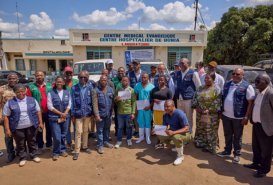
Four nurses in the Democratic Republic of the Congo have been discharged from a hospital in Bunia, after recovering from the Bundibugyo strain of the virus.
The recoveries bring the total to five in the current outbreak, offering a tangible message of hope as the Democratic Republic of the Congo and the World Health Organization ramp up their response across eastern provinces.
The discharges came on the same day WHO Director-General Dr. Tedros Adhanom Ghebreyesus visited Bunia and handed over a newly refurbished Ebola Treatment Centre with an initial capacity of 24 beds, expandable to 60. “Although there is currently no licensed vaccine or specific treatment for Bundibugyo virus, it is not without hope,” Dr. Tedros said. “Ebola caused by this virus can be survived with good medical care, and some people here in Ituri have already recovered. Seeking care early makes a real difference.”
The joint high-level mission, which included DRC Health Minister Dr. Samuel Roger Kamba, Communications Minister Patrick Muyaya Katembwe, and Dr. Tedros, underscores the strong partnership between the government and WHO as cases continue to climb.
As of today, health authorities have reported around 125-210 confirmed cases with 17 deaths in the DRC, alongside hundreds of suspected cases. The outbreak has spread from Ituri Province into North and South Kivu, with Bunia, Rwampara, and Mongbwalu among the hardest-hit areas. Nine confirmed cases and one death have been recorded in Uganda, linked to cross-border movement.
Officials are focusing on intensified surveillance, laboratory testing, contact tracing, infection prevention, and safe burials. Community engagement remains central, with dialogue underway involving local leaders, women’s groups, youth, religious figures, and the private sector to build trust and address concerns. Sixteen health workers have been infected in the DRC, highlighting the risks faced by frontline staff.
Unlike the more common Zaire ebolavirus, the Bundibugyo strain has no approved vaccine or specific treatment, though researchers are fast-tracking clinical trials for promising candidates. Control relies on proven measures: early detection, isolation, supportive care, and community cooperation.
The DRC, which has contained multiple previous Ebola outbreaks, brings significant experience to the effort, backed by strong political leadership and support from the UN system, Africa CDC, and international partners.
Meanwhile, insecurity in eastern DRC, population movements tied to mining, community resistance, and attacks on health facilities have complicated operations. Both the government and WHO have stressed the need to keep borders open to ensure the flow of medical supplies and personnel while maintaining essential primary healthcare services alongside the emergency response.
The outbreak, declared on May 15 and designated a Public Health Emergency of International Concern just days later, marks the 17th Ebola outbreak in the DRC since 1976. While case numbers are still rising, the recent recoveries and expanded treatment capacity offer cautious optimism. Dr. Dieudonne Mwamba Kazadi of the DRC’s National Institute of Public Health described the discharges as “a victory worth celebrating” that should encourage people to seek care promptly.
