
H.R. 7457: Moore and Smith Introduce Nigeria Religious Freedom and Accountability Act of 2026
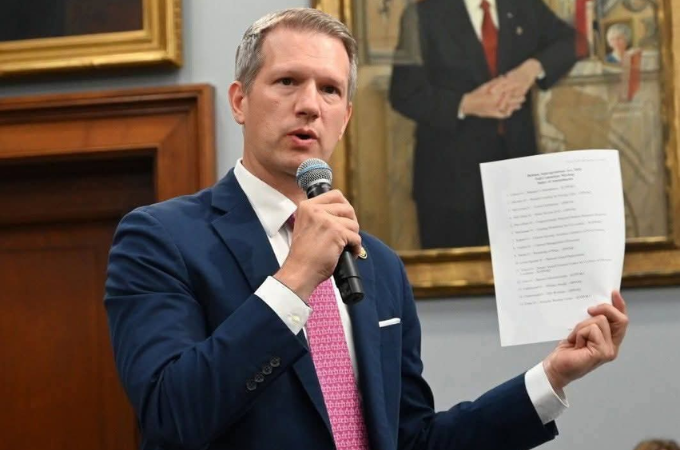
U.S. Representatives Riley Moore (R-WV) and Chris Smith (R-NJ), Chairman of the House Foreign Affairs Subcommittee on Africa, introduced the Nigeria Religious Freedom and Accountability Act of 2026 (H.R. 7457) on February 10.
This bipartisan legislation aims to compel transparency and accountability regarding the systematic persecution of Christians and other religious minorities in Nigeria.
The bill has secured high-level support from key Republican leaders, including House Foreign Affairs Committee Chairman Brian Mast (R-FL) and House Appropriations Committee Chairman Tom Cole (R-OK). The move follows a year of escalating violence and a major shift in U.S. foreign policy toward the West African nation.
Key Provisions of the Bill
The legislation mandates that the U.S. Secretary of State submit a comprehensive annual report to Congress. This report is designed to serve as a definitive record of persecution and a tool for policy adjustment. The requirements include:
-
Compliance Assessment: A detailed review of Nigeria’s adherence to the International Religious Freedom Act (IRFA), specifically looking at the government’s failure to repeal blasphemy laws or protect vulnerable communities.
-
Sanction Identification: A list of individuals and entities currently sanctioned—or being considered for sanctions—under the Global Magnitsky Act.
-
Aid Oversight: A breakdown of U.S. humanitarian aid to displaced Christians, ensuring it reaches the intended recipients through faith-based or non-governmental partners.
-
Security Assistance Evaluation: A “risk assessment” of whether U.S. security aid to the Nigerian military inadvertently enables or exacerbates religious persecution.
-
Blasphemy Law Investigation: An inquiry into the enforcement of Sharia-based penalties against non-Muslims and moderate Muslims in northern states.
Background: The Crisis of Persecution
The bill’s introduction is driven by harrowing data from late 2025 and early 2026. Watchdog groups like Intersociety and Open Doors report that Nigeria remains the deadliest place in the world for Christians.
The violence is primarily attributed to a combination of Boko Haram, ISWAP, and Fulani ethnic militias. While the Nigerian government often characterizes the Middle Belt violence as “farmer-herder clashes” over resources, the H.R. 7457 bill explicitly addresses the religious and ethnic dimensions of these attacks.
Alignment with the “Trump Doctrine” on Religious Freedom
H.R. 7457 is designed to codify and support the actions taken by President Donald Trump, who officially redesignated Nigeria as a Country of Particular Concern (CPC) on October 31, 2025.
-
Policy Shift: The Biden administration had removed Nigeria from the CPC list in 2021, a move critics argued signaled “indifference.”
-
2025 Redesignation: Trump’s return to the CPC designation allows for the use of sanctions and the potential suspension of non-humanitarian aid if the Nigerian government does not show “verifiable progress.”
-
Legislative Momentum: Similar bills, such as Sen. Ted Cruz’s S. 2747, laid the groundwork in late 2025 by calling for the targeting of northern governors who enforce blasphemy laws.
Current Status and Reactions
As of February 11, 2026, the bill has been referred to the House Committee on Foreign Affairs. Proponents in Washington argue that “inaction emboldens radical thugs,” while some Nigerian officials have criticized the bill as a violation of sovereignty that ignores the complexity of Nigeria’s security challenges.
