
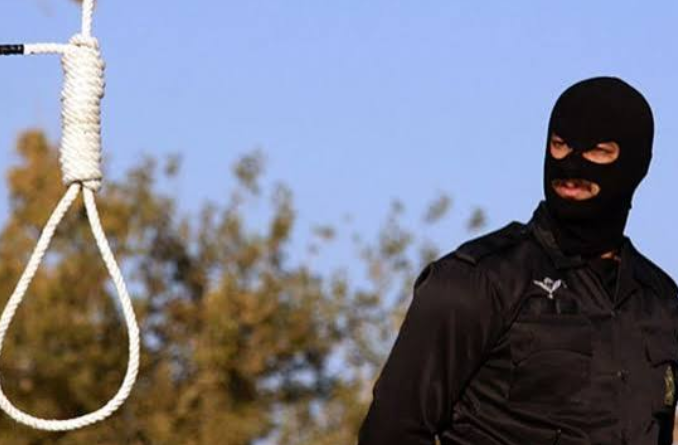
Iran Upholds Death Sentence for January Protester
Iran’s highest court has confirmed the capital sentence against a 28-year-old man detained during the wave of anti-government demonstrations that swept the country earlier this year, according to a Sunday report from the US-based monitoring group HRANA.
Rasoul Rezaei, a street vendor and father of two young children, received the death penalty from a Revolutionary Court in Mashhad on the charge of “waging war against God.” The Supreme Court has now endorsed that ruling.
HRANA noted that the precise actions used to justify the charge have not been publicly detailed and that Rezaei was taken into custody on 9 January in the town of Fariman, close to Mashhad. Since then he has been refused a lawyer of his own choosing and prevented from speaking by telephone or receiving visits from his family. He remains in Vakilabad Prison in Mashhad.
The northeastern city was a focal point of the unrest that erupted in late December and intensified through January. What began as protests over deteriorating living standards quickly broadened into open challenges to the political system. Security forces responded with lethal force, resulting in tens of thousands of deaths according to independent tallies. In the months that followed, Iranian authorities have continued to process cases arising from those events, with a series of death sentences and executions recorded by rights organisations.
United Nations High Commissioner for Human Rights Volker Türk stated last week that at least 27 individuals linked to the protests had been executed since 19 March, while more than 100 others facing national-security charges remained at risk of the same fate. Rezaei’s confirmed sentence forms part of that continuing judicial response.
Rezaei’s personal circumstances—supporting a family as a street vendor with children aged two and five—illustrate the ordinary backgrounds of many of those caught up in the demonstrations. The restrictions placed on his legal representation and contact with relatives have been highlighted by monitors as characteristic of the handling of protest-related files. The charge of “waging war against God” carries the maximum penalty under Iranian law and has been applied in a number of cases stemming from the January events.
The original protests were driven by mounting economic hardship that had intensified in the preceding months. Demonstrations that started over living costs evolved into wider political expressions, prompting a forceful crackdown. While official Iranian figures on the scale of the response have not matched independent estimates, the subsequent legal proceedings have kept the aftermath of the unrest in the public eye. Rights groups continue to track the progress of individual cases and the overall number of people still facing capital punishment.
The Supreme Court’s decision places Rezaei among those whose sentences have reached the final stage of domestic judicial review. It also underscores the persistence of severe penalties for participation in the demonstrations, even months after the streets have quieted. Monitoring organisations maintain that due-process concerns—limited access to independent counsel, restricted family contact and the breadth of national-security charges—remain central to these proceedings.
As the case stands, the focus rests on the individual outcome for a young father detained at the height of the protests and on the wider pattern of capital cases that have followed the January unrest. International attention, including the recent remarks by the UN rights chief, continues to centre on both the completed executions and the larger group of detainees still at risk.
