
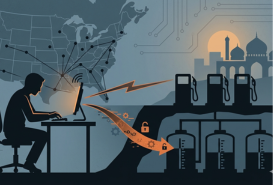
Iranian Hackers Linked to Breaches of Unprotected Fuel Tank Systems Across Multiple US States
US officials are investigating a series of cyber breaches targeting automatic tank gauge systems that monitor fuel levels at gas stations across multiple states, with Iran emerging as the leading suspect.
According to sources briefed on the matter, the intrusions involved hackers exploiting unprotected systems that lacked basic password protection, allowing limited manipulation of display readings but not the actual volume of fuel in the tanks. The breaches, first reported by CNN, have not caused any physical damage or disruption to fuel supplies.
However, they have raised significant safety concerns because unauthorised access to these systems could, in theory, enable hackers to conceal leaks or other hazards. The incidents add to a growing pattern of Iranian-linked cyber activity against American critical infrastructure amid the ongoing US and Israeli conflict with Iran.
Automatic tank gauge systems are designed to provide real-time data on fuel inventory and detect potential leaks at storage tanks beneath gas stations. Many of the compromised systems were left exposed online without adequate cybersecurity measures, a vulnerability that cybersecurity researchers have highlighted for more than a decade. In some cases, the hackers were able to alter the readings shown on the gauges, though they could not change the physical fuel levels.
Officials suspect Iranian hackers due to Tehran’s documented history of targeting similar systems. Iran has previously been linked to probes of oil and gas infrastructure, and its cyber operations have intensified since the outbreak of the current conflict. While forensic evidence is limited, the pattern of activity aligns with known Iranian tactics of seeking low-hanging fruit in critical sectors.
The breaches come at a sensitive time for the Trump administration. Higher fuel prices linked to the war with Iran have already affected American households, with recent polling showing that three-quarters of US adults believe the conflict has negatively impacted their finances.
Any confirmed Iranian role in domestic infrastructure attacks could intensify political debate over energy security and the broader costs of the ongoing war. US intelligence agencies have noted that Iranian cyber capabilities, while traditionally viewed as less sophisticated than those of China or Russia, have shown increased scale and aggression during the conflict. Hackers linked to Iran have targeted water utilities, medical device manufacturers, and other critical sectors, often combining technical intrusions with psychological operations and data leaks.
In one recent example, groups affiliated with Iran’s Islamic Revolutionary Guard Corps displayed anti-Israel messages on water systems after the October 7, 2023, Hamas attacks. During the current war, Iranian actors have also disrupted operations at a major US medical device company, leaked private emails of senior officials, and conducted influence campaigns. I
sraeli officials have reported a surge in both scale and speed of Iranian cyber activity, though they note some degradation due to defensive and offensive countermeasures. Cybersecurity experts warn that the gas station breaches represent a broader challenge for American infrastructure operators. Despite years of federal guidance from agencies such as the Cybersecurity and Infrastructure Security Agency, many systems remain exposed online.
Operators are now expected to review and secure these tank monitoring devices more rigorously, including implementing strong authentication and segmenting them from broader networks. The incidents also carry potential safety implications. If hackers can manipulate readings, they could theoretically mask a real leak, delaying emergency response and increasing risks of fire, environmental contamination, or explosion. While no such scenario has materialised, security professionals say the possibility underscores the need for urgent hardening of these systems nationwide.
