
Kenyan Protests Escalate Against U.S.-Backed Ebola Quarantine Facility in Nanyuki Despite Court Orders
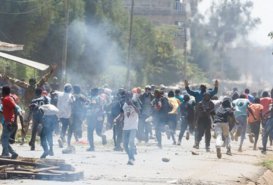
Fresh clashes erupted in Nanyuki, Laikipia County, yesterday as hundreds of residents protested a controversial U.S. supported 50 – bed Ebola quarantine and isolation facility at Laikipia Air Base.
Police deployed tear gas, water cannons, and arrested dozens, with reports of live rounds fired resulting in at least one additional death. The protests have now claimed at least three lives overall, with dozens injured in the latest wave of unrest.
The facility, funded partly with around $13 million in U.S. aid, is intended primarily to quarantine asymptomatic American personnel exposed to Ebola while working in outbreak zones in the Democratic Republic of Congo and Uganda. U.S. and Kenyan officials have stressed it would not admit symptomatic patients, who would be evacuated elsewhere, and describe it as a precautionary measure amid a Bundibugyo strain outbreak with no approved vaccine or treatment. As of early June 2026, the DRC has reported over 515 confirmed cases and 91 deaths, Uganda 19 confirmed cases, and Kenya zero cases.
Local residents, business owners, and activists strongly oppose the project, citing risks of importing the virus into a key tourist and agricultural area, potential harm to health, livestock, and the economy, and a perceived lack of transparency and community consultation. Protesters have carried Kenyan flags, mock coffins labeled “Ebola,” and chanted slogans such as “Laikipia is not a dumping site,” arguing Kenya should not bear risks for U.S. citizens when it faces no domestic threat. President William Ruto has defended the facility as part of reciprocal U.S. aid and Kenya’s broader disease preparedness efforts, noting plans for 23 such centers nationwide.
Kenya’s High Court has repeatedly intervened. On May 28 it suspended construction and barred entry of exposed individuals. A June 2 ruling extended the halt until around June 23 and ordered full disclosure of agreements and biosafety protocols. Despite these orders, satellite imagery and eyewitness accounts show continued activity, including cleared land, erected tents, and U.S. military flights delivering equipment. Officials have indicated work is proceeding while legal challenges are addressed.
Earlier protests on June 1-2 turned deadly with two people shot and killed. The June 9 demonstrations saw running battles, road blockades, business closures, and school disruptions. Rights groups accuse security forces of excessive force, while authorities cite risks from prior violence.
The U.S. Embassy has advised American citizens to exercise caution in the area.The situation highlights deep public distrust of foreign health initiatives, sensitivities around sovereignty, and strains in U.S. – Kenya relations. Medical professionals, the Law Society of Kenya, and other groups have called for greater transparency. Supporters view the project as strengthening national preparedness. The next court hearing on June 23 is expected to be critical.
