
US Strikes Iran for Ninth Night as Bahrain and Kuwait Activate Air Defenses
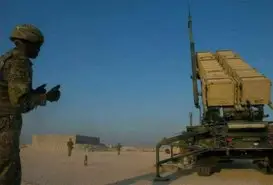
The United States has conducted its ninth consecutive night of strikes against Iran, while Bahrain and Kuwait activated air defenses and sounded warning sirens in response to reported Iranian retaliatory attacks.
US Central Command (CENTCOM) said the latest operation targeted Iranian military command centres, air defence systems, coastal surveillance sites, missile and drone launch facilities, and communications networks. The strikes aimed to degrade Tehran’s ability to threaten commercial shipping and civilian mariners in the Strait of Hormuz.
President Donald Trump described the action as hitting Iran “very hard,” stating the strikes honoured fallen US service members. He claimed the United States now controls the strategic waterway, a assertion Iran has firmly rejected.
Iranian state media reported that overnight strikes in the northwestern city of Tabriz killed at least one person and wounded several others. Locations in the southern port city of Bushehr, home to Iran’s only civilian nuclear power plant, were also hit.
Iran’s Islamic Revolutionary Guard Corps claimed responsibility for strikes on US-linked military targets in Kuwait, including the destruction of an early-warning radar system and damage to drone facilities at Ali Al Salem Air Base. In Bahrain, which hosts the US Navy’s 5th Fleet, air defences intercepted incoming threats after sirens sounded in Manama.
Maritime security incidents added to the tension. The UK Maritime Trade Operations agency reported a vessel on fire and later adrift off Oman’s Kumzar village after being struck by a projectile. Iran’s Revolutionary Guards separately stated that two oil tankers attempting to transit the strait had exploded and been brought to a halt.
A US service member was killed in Iraq during a controlled demolition of an Iranian drone, bringing confirmed American military fatalities to at least 17 since late February. Two other troops died in a strike on Jordan on Friday.
The escalation follows the collapse of a mid-June ceasefire agreement. Ryanair reported a 34% drop in its fiscal first-quarter net profit, citing surging jet fuel prices and reduced fares linked to the Middle East conflict.
Iranian officials maintained a defiant public stance. Foreign Ministry spokesman Esmaeil Baghaei rejected any ambiguity in a previous memorandum of understanding with the US, insisting the text was clear and that Washington bore responsibility for its breakdown. He described Iran’s role in the Strait of Hormuz as “non-negotiable” and said Tehran had halted its commitments after US actions.
Baghaei confirmed Iran had received mediation proposals to curb escalation and would continue diplomatic efforts alongside military responses. He rejected framing the situation as a binary choice between negotiations and war, stating that “diplomacy and defense serve the same national interests.”
The Islamic Resistance in Iraq threatened to target US interests with full force if attacks on Iran continued. Iran’s Interior Minister Eskandar Momeni travelled to Pakistan for talks as fighting persisted.
The situation remains highly volatile. With both military operations and limited diplomatic tracks active, the coming hours will be critical in determining whether the conflict can be contained or risks drawing in more actors across the Gulf and beyond, with significant implications for global energy markets.
