
São Tomé and Príncipe Holds Presidential Vote as Incumbent Seeks Re-election
Voters in São Tomé and Príncipe went to the polls on Sunday in a presidential election testing the stability of one of Africa’s most consistent democracies, with incumbent Carlos Manuel Vila Nova seeking a second term against a field of challengers.
Polling stations opened across the twin-island nation, where more than 200,000 citizens were eligible to choose their head of state for the next five years. Early reports indicated steady turnout, with ballots also cast by diaspora communities, particularly in Portugal. No major incidents of violence or irregularities were immediately reported, in line with the country’s record of peaceful transitions since independence from Portugal in 1975.
Vila Nova, running as an independent following tensions within his former party, faces his strongest challenge from Nito Viegas d’Abreu of the Independent Democratic Action (ADI) party, backed by former Prime Minister Patrice Trovoada. Other candidates include Eugénio Rodrigues da Trindade Tiny and Miques João do Nascimento de Jesus Bonfim. Former Prime Minister Jorge Bom Jesus withdrew earlier.
The constitution requires an absolute majority for outright victory in the first round; otherwise, the top two candidates proceed to a runoff scheduled for 9 August. Official results are expected in the coming days as the National Electoral Commission processes votes from remote areas and overseas.
National Electoral Commission chief Jeudiger Nascimento expressed concern over low turnout, noting that many who visited polling stations ultimately did not cast ballots, though no official figures were released.
The election occurs against a backdrop of persistent challenges for the cocoa-producing nation: high youth unemployment, heavy reliance on foreign aid and tourism, and lingering questions over governance after a short-lived 2022 assault on a military barracks described by authorities as a failed coup attempt. Despite these issues, São Tomé and Príncipe maintains a reputation for relative stability and press freedom uncommon in the region.
The president holds a largely ceremonial role focused on representation and promulgation of laws, while executive powers rest primarily with the prime minister. Vila Nova, 66, elected in 2021 with ADI support, has positioned himself as a guarantor of political stability. He has faced criticism for the dismissal of former Prime Minister Trovoada in January 2025, a move later ruled unconstitutional.
Viegas d’Abreu, 43, has campaigned on renewal, promising greater emphasis on jobs for young people and improved living standards, presenting himself as a voice for those born after independence.
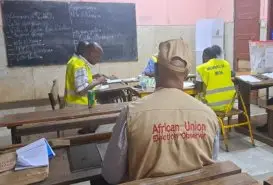
International observers closely monitored the process. The European Union deployed a full election observation mission, while the African Union fielded a delegation led by former Mozambican President Filipe Nyusi. Preliminary assessments are expected shortly.
The small Gulf of Guinea nation, strategically located near vital shipping lanes, derives most revenue from agriculture — particularly cocoa, coffee, vanilla and pepper — alongside tourism and emerging oil and gas exploration. It remains heavily dependent on international aid, with a large majority of its population living below the poverty line. Partnerships include ties with the European Union, Portugal, China and Russia.
As vote-counting continues, the election once again highlights São Tomé and Príncipe’s standing as a democratic bright spot on the continent, even in resource-constrained settings.
