
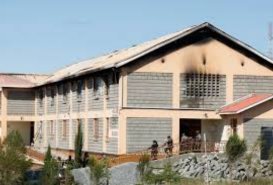
Eight Students Arrested for Arson in Deadly Kenya Dormitory Fire That Killed 16 Girls
Eight students have been arrested in connection with a suspected arson attack that killed 16 girls and injured 79 others in a dormitory fire at Utumishi Girls’ Academy Senior School in Gilgil, Nakuru County, west-central Kenya.
The blaze broke out in the early hours of May 28, 2026, prompting a major investigation into both the cause of the fire and longstanding safety failures at the institution.
Police from the Directorate of Criminal Investigations (DCI) said preliminary findings, including witness interviews and CCTV footage, identified the eight girls as persons of interest in the planning and execution of the incident. The students are currently in custody as detectives continue to establish the full motive and sequence of events.
The fire tore through the upper floor of a dormitory housing 135 bunk beds, raising immediate questions about overcrowding. Many of the victims were found near a locked emergency exit, while others suffered injuries after jumping from windows. Education Cabinet Secretary Julius Ogamba reported that 79 students were injured, with most discharged from hospital and a smaller number still receiving treatment.
Ogamba told reporters that preliminary investigations revealed two teachers had allegedly been informed of possible plans for unrest or a fire but failed to take preventive action. He criticised the school administration for ignoring safety regulations, citing overcrowded dormitories and inadequate emergency preparedness. In response, the government has disbanded the school’s board of management and pledged disciplinary measures, including potential action by the Teachers Service Commission against staff found negligent.
Utumishi Girls’ Academy, which serves more than 800 students, is a boarding institution located about 120 kilometres northwest of Nairobi. The tragedy has once again exposed deep-rooted challenges in Kenya’s boarding school system, where rapid enrolment growth often outpaces infrastructure improvements and oversight.
School fires have been a recurring and painful feature of Kenya’s education landscape for decades. In 2001, Kenya’s deadliest dormitory blaze at Kyanguli Secondary School claimed 67 lives in what authorities determined was arson. More recent incidents include a 2024 fire at a boarding primary school in Nyeri County that killed 21 students and a 2017 case in which 10 students died. Researchers and government reports have frequently linked such events to student protests over harsh discipline, poor living conditions, exam pressure, and inadequate facilities.
Many boarding schools in Kenya accommodate large numbers of students from rural areas, with parents viewing them as places offering focused study time away from home. Yet this model has repeatedly highlighted vulnerabilities: inward-opening doors, grilled windows, insufficient fire exits, and sometimes lax enforcement of safety manuals. A 2017 government task force and subsequent parliamentary inquiries have called for stricter standards, but implementation has often lagged.
President William Ruto and other leaders have expressed condolences, describing the latest loss as a national tragedy while calling for prayers. Parents gathered anxiously at the school gates in the aftermath, some still awaiting confirmation about their daughters as identification processes continued. Community members stepped in to support grieving families.
As investigations proceed, the eight arrested students are expected to face court proceedings in the coming days. Authorities have emphasised that anyone found culpable – whether students or staff – will be held accountable.
The incident has reignited public debate on student welfare, the pressures of Kenya’s competitive education system, and the responsibility of school administrators to prioritise safety alongside academic goals. While the precise trigger for this fire is still under determination, the human cost is already painfully clear.
