
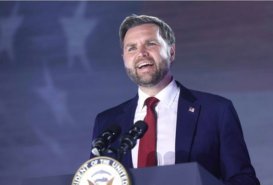
Vice President Vance confident Israel will eventually back landmark US-Iran accord
US Vice President JD Vance says he is confident Israel will eventually support the memorandum of understanding reached between Washington and Tehran, describing the pact as a step toward greater regional stability.
Speaking in separate interviews and via an explanatory video posted on X, Vance emphasized that once Israelis fully understand the agreement’s terms, they will view it as a pathway to peace and prosperity in the Middle East.
“What we know is this agreement is going to make Israel safer, it’s going to make the entire region safer,” Vance told NBC News. He acknowledged “misinformation” circulating in both Iranian and Israeli media but expressed optimism that Israeli public opinion would shift as details become clear.
The comments come amid ongoing tensions between the Trump administration and Israeli Prime Minister Benjamin Netanyahu. Netanyahu stated during a recent press conference that Israel is not a party to the memorandum and has not yet received full details of the agreement. Trump has publicly criticized Netanyahu in recent days, while Vance described such disagreements as normal even among close allies.
President Donald Trump, attending the G7 summit in France, declared on Truth Social that Iran has “agreed to never have a Nuclear Weapon!” The statement appears to reference a clause in the memorandum of understanding electronically signed on Sunday, in which Iran commits to forgoing nuclear weapons. Trump also dismissed reports of a $300 million US payout to Tehran as “Fake News” pushed by Democratic operatives.
However, administration messaging has shown some inconsistencies. A senior Trump aide briefing reporters on Monday discussed the possibility of releasing frozen Iranian funds, sanctions relief, and a substantial $300 billion reconstruction fund tied to future nuclear concessions. The full text of the memorandum is expected to be released soon, though timelines have varied between officials.
Vance told Fox News that Trump may release the full agreement before Friday’s scheduled in-person signing ceremony. He also confirmed to NBC that nuclear inspectors from the International Atomic Energy Agency will “absolutely” return to Iran under the deal, with the US assisting in the destruction of highly enriched uranium stockpiles as explicitly outlined in the memorandum.
However, internal US skepticism persists. According to Axios (citing multiple sources), CIA Director John Ratcliffe briefed senior officials that intelligence assessments suggest Iran’s intentions may not align with its commitments. Secretary of State Marco Rubio and Defense Secretary Pete Hegseth reportedly share this caution, while advisers Jared Kushner and Steve Witkoff have voiced support. Vance, Witkoff, and Kushner are scheduled to meet on Friday with Iranian Parliamentary Speaker Mohammad-Bagher Ghalibaf and Foreign Minister Abbas Araghchi to advance the next phase of negotiations.
The agreement aims to end hostilities between the US and Iran and establish a framework for longer-term nuclear talks. Both sides have framed the memorandum as a political victory, selectively highlighting provisions that bolster their positions. Iran has long maintained it does not seek nuclear weapons – a stance it also took in the 2015 JCPOA, which Trump withdrew from during his first term.
The developments unfold against a backdrop of regional sensitivity. Israel, which has viewed Iran’s nuclear program as an existential threat, has not been included in the initial agreement. Senior GOP senators have reportedly described certain alleged terms as a “nightmare for Israel,” though specific details remain limited pending full disclosure of the text.
Meanwhile, the human and diplomatic complexities were visible on other fronts. In Los Angeles, Iran opened its World Cup campaign with a 2-2 draw against New Zealand, an event overshadowed by protests. Hundreds of Iranian-American demonstrators gathered outside the stadium, waving pre-revolutionary flags and anti-government signs, while many inside the venue displayed similar symbols in defiance of FIFA rules. The match itself saw Iran twice come from behind, with the result leaving their knockout-stage hopes in doubt alongside Group G rivals Egypt and Belgium.
In Israel, the IDF announced a routine military drill in the northern West Bank for Tuesday, with residents warned of troop movements and explosions unrelated to any active security incident.
