
Opposition Parties Vow Fierce Appeal after Federal High Court Orders Deregistration
Political parties facing deregistration following a Federal High Court order have mounted fierce resistance, describing the judgment as a politically motivated attempt to weaken opposition voices and tilt the field toward the ruling All Progressives Congress (APC) in the 2027 general elections.
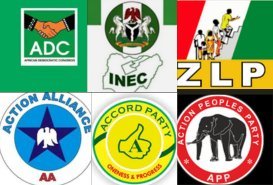
The ruling by Justice Peter Lifu on Monday, June 15, 2026, directed the Independent National Electoral Commission (INEC) to remove the African Democratic Congress (ADC), Accord Party, Action Alliance, Action Peoples Party, and Zenith Labour Party from its register. The parties were accused of failing to meet constitutional electoral performance thresholds under Section 225 of the 1999 Constitution (as amended) and the Electoral Act 2022.
However, the decision has triggered widespread condemnation from the affected parties and broader opposition stakeholders, who argue it undermines multi-party democracy and ignores judicial hierarchy.
ADC National Publicity Secretary Bolaji Abdullahi led the strongest pushback, rejecting the judgment outright and announcing immediate legal action. “By tomorrow morning, ADC will be in the Court of Appeal,” he declared in an ARISE News interview last night. In a formal statement, the party warned: “You are playing with fire… We reject any and all attempts to intimidate, suppress, deregister, or politically extinguish our party.” Abdullahi described the ADC as “born out of adversity” and highlighted its recent primaries as having set “an unprecedented democratic standard” in Nigeria. The party also plans to petition the National Judicial Council over what it called Justice Lifu’s conduct.
The ADC views the timing of the ruling as suspicious, coming shortly after it positioned itself as a platform for a potential high-profile ticket involving former Vice President Atiku Abubakar and former Rivers State Governor Rotimi Amaechi. Atiku’s media adviser, Paul Ibe, described the development as “the biggest manifestation of President Bola Tinubu’s alleged hell-bent bid to undermine the opposition and entrench a de facto one-party state.”
Accord Party, another directly affected party, expressed similar outrage, particularly given the implications for its members holding public office. Osun State Governor Ademola Adeleke, who flies the Accord Party flag and is seeking re-election in the upcoming off-cycle governorship poll, now faces fresh uncertainty. Stakeholders close to the governor described the ruling as disruptive to ongoing political preparations and an unwelcome distraction from governance.
Peter Obi and activist Omoyele Sowore, alongside chairmen of various parties, have warned against the politicisation of the judiciary and electoral institutions. Many described the move as selective targeting of parties that have shown recent growth and defections, especially those challenging the APC amid public dissatisfaction with economic conditions.
Senior lawyers and democracy advocates have advised the parties to pursue urgent appeals. They note that the Federal High Court ruling proceeded despite a stay of proceedings granted by the Court of Appeal on May 22, 2026, in an appeal filed by the Accord Party. The appellate court’s three-member panel, led by Justice Mohammed Danjuma, scheduled a hearing for October 27, 2026. Critics have accused Justice Lifu of judicial overreach for ignoring the superior court’s directive.
INEC had previously told the court in a counter-affidavit that the listed parties, particularly the ADC, met registration requirements and had not breached thresholds warranting removal.
Stakeholders across the opposition spectrum argue that deregistering functional parties with active structures and recent electoral activity sets a dangerous precedent. The ADC, in particular, has gained visibility through a structured primary process and defections from other parties, building momentum as a credible alternative platform.
The ADC has been particularly emphatic: “Whatever it takes, the ADC will be on the ballot so long as the 2027 election is to hold.”
