
UN reports over 1,000 civilian deaths from drone strikes in Sudan in early 2026
Drone strikes have killed more than 1,000 civilians in Sudan during the first five months of 2026, according to the United Nations High Commissioner for Human Rights, as both sides in the country’s ongoing civil war increasingly rely on unmanned aerial vehicles, intensifying the toll on non-combatants.
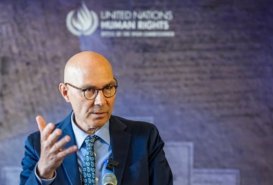
Volker Türk told the UN Human Rights Council in Geneva on June 16 that his office has documented a “sharp increase” in drone attacks, alongside rising incidents of rape and sexual violence. The conflict, now in its fourth year, continues to escalate with devastating consequences for civilians.
“In Sudan, the horrific conflict has expanded and escalated, marked by a sharp increase in the use of drone warfare,” Türk said. His office registered the deaths of over 1,000 civilians from drone strikes between January and May this year, with drones accounting for more than 80% of recorded civilian fatalities in that period, particularly in areas such as Kordofan.
The war erupted on April 15, 2023, when tensions between the Sudanese Armed Forces (SAF), led by General Abdel Fattah al-Burhan, and the paramilitary Rapid Support Forces (RSF), commanded by Mohamed Hamdan Dagalo (Hemedti), escalated into open fighting in Khartoum and other parts of the country. What began as a power struggle has since fragmented Sudan into contested zones, with the SAF controlling much of the east and north, including Port Sudan, and the RSF holding significant territory in Darfur and central regions.
Data from the Armed Conflict Location & Event Data Project (ACLED) indicates that the conflict has killed at least 59,000 people since April 2023, though the true figure is likely higher due to challenges in reporting and access. In 2025, drone-related deaths rose by 600% compared to 2024, with an 81% increase in drone attacks, resulting in at least 2,670 fatalities among both combatants and civilians.
Examples cited in recent reporting include an RSF strike in el-Obeid that hit a cemetery and gas station, killing at least 15 civilians, and an SAF strike on civilian vehicles in West Kordofan that killed 10 people, including eight children. Both sides have been accused of using drones to target populated areas, markets, hospitals, schools, fuel depots, and displacement camps.
The proliferation of drones has transformed the nature of the fighting. Both the SAF and RSF have acquired systems from foreign suppliers. The SAF has reportedly used Turkish Bayraktar TB2 and Akinci models, often routed through Egypt, as well as Iranian Mohajer-6 and Ababil systems, with additional support from Russia. The RSF has been linked to Chinese systems such as CH-95 and Wing Loong variants, reportedly supplied through networks involving the UAE and transit points in Chad, Libya, and Ethiopia.
These relatively affordable, long-range drones have enabled strikes deep behind front lines and shifted tactics toward infrastructure disruption and psychological impact on civilian populations.
The humanitarian situation in Sudan remains dire. The conflict has displaced over 12 – 13 million people (the world’s largest displacement crisis) and pushed parts of the country into famine. More than 30 million people require humanitarian assistance.
Drone strikes have further complicated aid delivery by targeting or disrupting supply convoys and critical infrastructure. Reports of widespread sexual violence, including rape used as a weapon of war, have also increased.
Türk has repeatedly called for an immediate end to arms transfers fueling the conflict, unrestricted humanitarian access, and accountability for violations that may amount to war crimes and crimes against humanity. “This must not be allowed to happen,” he warned earlier. “The international community is on notice.”
In Sudan, neither side has achieved a decisive victory, resulting in a protracted stalemate sustained by control over resources such as gold and influenced by external geopolitical interests.International efforts to mediate have so far yielded limited results. Calls continue for renewed diplomatic pressure, stricter controls on arms flows, and improved protection for civilians. Without meaningful progress, 2026 risks becoming one of the deadliest years in Sudan’s conflict, which remains one of the most severe yet under-reported humanitarian emergencies of the decade.
Both the SAF and RSF have denied deliberately targeting civilians, though independent monitors continue to document patterns of indiscriminate attacks.
