
Biya Returns After Record 74-Day Absence
Cameroon’s 93-year-old President Paul Biya returned home on Thursday after a record 74-day absence in Switzerland, the longest continuous stay abroad of his more than four-decade rule, temporarily easing but not ending speculation over his health and the country’s succession arrangements.
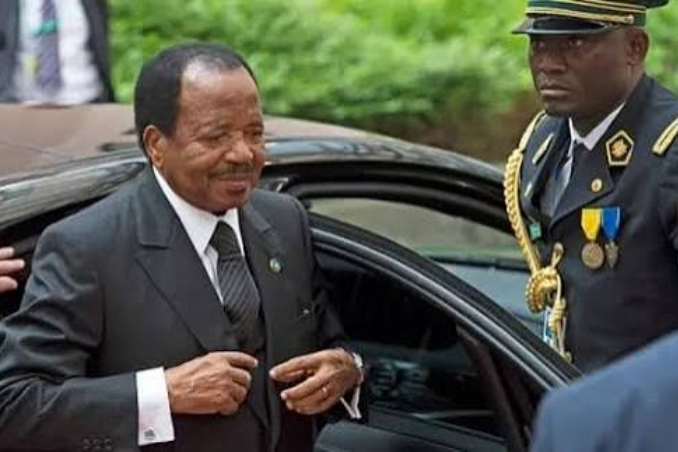
Biya landed at Yaoundé’s Nsimalen International Airport in the late afternoon aboard a chartered flight from Geneva. Accompanied by First Lady Chantal Biya, he was received by Prime Minister Joseph Dion Ngute and senior officials. State broadcaster CRTV aired live coverage of the arrival. The president waved briefly to supporters from his vehicle as a motorcade departed for the Etoudi Unity Palace.
Supporters of the ruling Cameroon People’s Democratic Movement lined parts of the route, waving party colours and banners. The presidency’s Civil Cabinet confirmed that Biya and the First Lady had returned “following a private stay in Europe.”
Biya left Cameroon on 7 June for what his office described as a brief private stay in Europe. He remained in Geneva with family members and close aides for more than 10 weeks. The prolonged trip fuelled widespread rumours about his physical condition and capacity to govern. Government officials insisted he was working from Switzerland and denied reports of hospitalisation. Communication Minister René Emmanuel Sadi stated earlier that the president was alive and that there was no vacancy of power.
During the absence, Biya issued decrees from Geneva, including a military reshuffle that promoted officers and reaffirmed key appointments in the presidential guard. Opposition figures described the country as operating on “autopilot” and called on the Constitutional Council to examine the situation. The council took no formal action.
Biya has governed Cameroon since 1982, making him one of Africa’s longest-serving leaders. He began an eighth term in late 2025 after a disputed election. In April 2026, parliament reinstated the post of vice president, which the president appoints, but Biya has not named anyone to the role. Under the constitution, in the absence of a vice president, the president of the Senate would assume interim duties if the presidency is declared vacant. Critics argue the lack of a clear succession plan heightens uncertainty, while pointing to possible contenders within the president’s family circle, including his son Franck Biya.
Biya’s frequent stays in Europe, particularly Geneva, have long been a feature of his presidency and a recurring source of public discussion. His return ends the immediate phase of speculation triggered by this absence but leaves unresolved deeper questions about governance continuity in a nation of nearly 30 million people, the large majority of whom have known only his leadership.
