
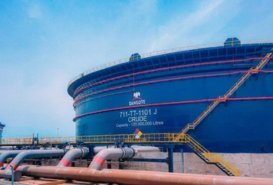
Dangote Refinery Captures 20% of European Jet Fuel Market, Tops Global Exports
Nigeria’s Dangote Petroleum Refinery has achieved a major milestone, emerging as the world’s single largest exporter of jet fuel for the month of April 2026.
This surge was driven by strong global demand, particularly from European buyers preparing for the summer travel season, as supply disruptions in the Middle East pushed traders to seek reliable alternatives. Nigerian cargoes accounted for as much as 20% of Europe’s jet fuel imports in April.
According to data from S&P Global Commodities at Sea, the 650,000 barrels-per-day facility in Lekki exported between 158,000 and 160,000 barrels per day of aviation turbine fuel last month. That volume pushed it ahead of traditional suppliers as airlines and traders scrambled for reliable sources amid ongoing disruptions in the Middle East.
The refinery has come a long way since it began commercial operations in 2024. What started as modest exports of around 20,000 barrels per day has grown steadily, with cumulative jet fuel shipments now exceeding 57 million barrels. Cargoes have reached markets across Africa, Europe, and beyond, including direct supplies to major carriers like Ethiopian Airlines.
Aliko Dangote has always seen the refinery as much more than a solution for Nigeria’s domestic fuel needs. The company is now actively expanding into international crude trading and refined products marketing. Plans are already advancing to more than double capacity to 1.4 million barrels per day by 2028, which would make it the largest single-site refinery anywhere in the world.
For Nigeria, this is a notable shift. The country has long been one of Africa’s biggest crude oil producers while still relying heavily on imported refined products. The Dangote Refinery is gradually changing that equation. It has helped stabilise local supply in several categories and is now earning valuable foreign exchange through exports. At the same time, it shows how large-scale African-led infrastructure can compete effectively on the global stage and reduce the continent’s dependence on imported fuels.
This achievement comes at a time when global supply chains remain vulnerable to geopolitical shocks. Observers see it as an important step toward greater energy security and industrial capability for Nigeria and the wider region. While challenges like crude supply consistency and balancing domestic versus export priorities remain, April’s performance has silenced many early skeptics and underscored the refinery’s growing influence.
