
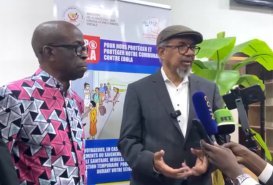
WHO Chief Tedros Visits DRC as Bundibugyo Ebola Outbreak Worsens in Conflict-Ravaged East
World Health Organization Director-General Dr. Tedros Adhanom Ghebreyesus arrived in Kinshasa yesterday, to show solidarity with the Democratic Republic of the Congo as it battles its 17th Ebola outbreak, this time caused by the less common Bundibugyo virus strain.
Dr. Tedros is expected to travel to Ituri Province, the main epicenter, to meet frontline health workers, local authorities, and affected communities. In a direct message to the Congolese people, he said: “You are not alone.” He also highlighted the country’s strong track record, noting that DRC has successfully contained 16 previous Ebola outbreaks, while acknowledging that the current situation is particularly difficult due to the security challenges on the ground.
As of May 27-28, health authorities in the DRC have reported 1,077 suspected cases, 121 confirmed cases, 246 suspected deaths, and 17 confirmed deaths. The outbreak is spreading across Ituri Province (including Bunia, Mongbwalu, and Rwampara health zones), parts of North Kivu, and now South Kivu.
In neighbouring Uganda, there are 7 confirmed cases linked to travel from the DRC and at least one death, with some cases reaching Kampala. Uganda has temporarily closed its border with the DRC, with exceptions for screened humanitarian traffic.
This is only the third known outbreak of the Bundibugyo strain. Unlike the more familiar Zaire ebolavirus, there are currently no approved vaccines or specific treatments, though promising candidates are being evaluated for possible emergency use. Response efforts rely heavily on supportive care, contact tracing, safe burials, and strict infection prevention measures.
Dr. Tedros has described the situation as a “catastrophic collision” of disease, conflict, and hunger. He has called for an immediate ceasefire to allow safe and unimpeded access for health workers and humanitarian teams. The outbreak is currently outpacing response efforts, and only about one-third of the required funding for supplies and operations has been secured so far.
The WHO declared the outbreak a Public Health Emergency of International Concern (PHEIC) on May 17. While the risk is considered high at national and regional levels, it remains low globally, with no linked cases reported outside the immediate area.
WHO, CDC, Médecins Sans Frontières, UNICEF, and other partners are scaling up surveillance, building new treatment centres, strengthening community engagement, and coordinating across borders with Uganda.
Informed observers believe the outbreak can still be brought under control with urgent improvements in access, funding, and community trust. However, the combination of a vaccine gap for this strain and active conflict makes this one of the most challenging Ebola responses in recent years.
