
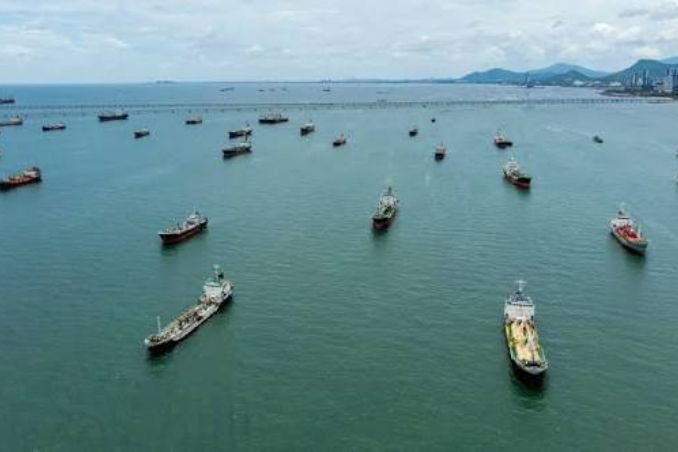
Hormuz Traffic Rebounds as Pressure Mounts
Commercial shipping through the Strait of Hormuz has surged nearly 400 percent over the past two weeks, with almost 200 vessels transiting last week compared with around 40 two weeks earlier, according to UK Maritime Trade Operations data, even as the United States prepares to intensify economic pressure on Iran and Tehran advances plans to charge service fees on passing ships.
UKMTO figures recorded 103 inbound and 89 outbound movements in the most recent seven-day period, a 27 percent rise from the previous week. About half the recent transits involved oil tankers, many registered under Panamanian or Liberian flags. Maritime analysts attribute much of the increase to growing use of a southern corridor hugging the Omani coast.
Authorised by the International Maritime Organisation and supported by US naval forces, the route has become the preferred path for the majority of liquid cargo. Kpler data indicate that more than 80 percent of liquid cargoes over the past fortnight either followed the Omani channel or sailed with Automatic Identification System transponders switched off, likely using the same southern path.
Before the conflict that began in late February, 100 to 160 vessels typically passed daily through the 21-mile-wide waterway that carries roughly one-fifth of global seaborne oil. Traffic collapsed after hostilities erupted, at times averaging fewer than 10 vessels a day. A temporary 60-day memorandum earlier in the summer briefly lifted volumes, but that arrangement expired without a lasting settlement.
Current levels remain only about 20 percent of pre-war norms. US Central Command has reported assisting more than 1,000 commercial vessels since May, often guiding tankers close to Oman under naval and air protection while maintaining a blockade on Iranian ports.
Iran continues to reject the southern corridor and asserts exclusive authority through its Persian Gulf Strait Authority. Iranian forces struck five vessels with projectiles in the past week, damaging ships and leaving casualties, according to reports. Officials have warned that vessels violating their protocols face fines, detention or confiscation.
On Sunday, Iran’s parliamentary National Security and Foreign Policy Commission approved a key article of a draft “Strategic Action Plan” that would authorise charges for navigation services, environmental protection, fueling, insurance, safety and security measures. Fees would be payable in rials or other designated currencies. The provision still requires full parliamentary approval and Guardian Council review before taking effect.
Meanwhile, the United States is preparing what President Donald Trump has termed an “economic D-Day” of secondary sanctions beginning today. In a recent social media post, Trump warned that any country allowing financial institutions, businesses or government entities to provide a lifeline to Iran would face severe consequences.
Treasury Secretary Scott Bessent has described the measures as the single greatest financial offensive ever mounted against an adversary, targeting oil smuggling, currency swaps, cash transfers, exchange houses, ship registries and front companies. Bessent is expected to detail the steps at a press conference today, framing them as a “one-two punch” alongside the existing naval blockade.
Iranian Foreign Minister Abbas Araghchi has dismissed the campaign as a diversion from US domestic economic pressures and a recycling of failed policies. Iranian officials note that the country has adapted to decades of sanctions through alternative markets and informal networks. Inflation inside Iran has remained elevated, and the United Arab Emirates, previously a key hub for trade and financial flows, has cut off all transactions with Iranian entities.
Oil markets have responded unevenly, with Brent crude hovering near 94 dollars a barrel – well below wartime peaks but still above pre-conflict levels. Hundreds of vessels remain stranded or holding position inside the Persian Gulf, and war-risk insurance premiums stay extraordinarily high. The dual-corridor reality has created a contested waterway in which commercial traffic is possible under US protection along the southern route, yet Iranian harassment capacity and legal claims persist.
