
Landslide Kills 30 at Guinea Landfill
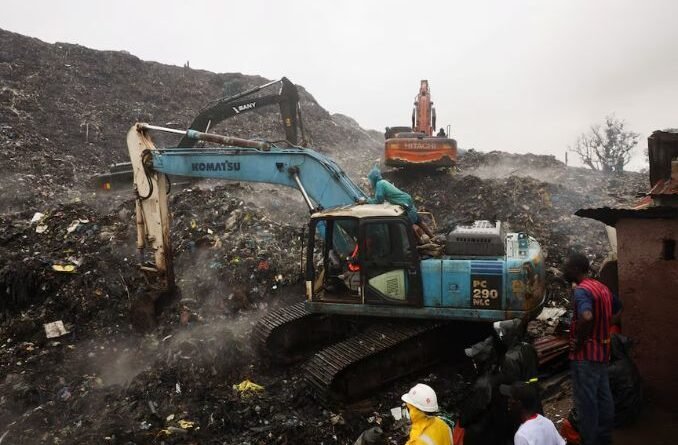
A landslide at an open-air landfill in Guinea’s capital killed 30 people and injured 22 others early on Sunday when heavy overnight rains caused a massive mound of waste to collapse onto nearby tents, shacks and homes.
The incident occurred around 2 a.m. local time in the Dar-es-Salam area of the Gbessia commune in Conakry. Rescue workers using excavators and other equipment searched through the debris throughout the day as crowds gathered at the scene. Government officials confirmed the death toll at 30, with six people seriously injured and 16 suffering lighter injuries. Many of the wounded were taken to Donka University Hospital.
One resident, Cire Diallo, told reporters that all five of her children had been killed. “I have lost all my children. All I can do is put my trust in God,” she said.
Prime Minister Amadou Oury Bah visited the site later on Sunday to assess the damage and supervise the response. In a government statement, he extended condolences on behalf of President Mamady Doumbouya, pledged medical care and assistance for those affected, and urged the public to remain calm, show solidarity and follow instructions from rescue services. Minister of Territorial Administration Djénabou Touré also attended and reiterated plans to relocate remaining families living near the site.
The collapse carried a bitter irony. On Thursday the government had announced it would close the landfill and relocate the waste outside Conakry because the site had become dangerously unstable, particularly during the rainy season. Locals had received eviction notices and some had already left, yet many remained when the mound gave way. A military sanitation officer confirmed the facility had been designated for formal closure on the day of the disaster.
This is not the first fatal incident at the Dar Es Salam dumpsite. A similar collapse in August 2017 killed at least eight to ten people after heavy rains buried nearby homes.
The tragedy highlights recurring risks in Conakry and across parts of West Africa during the May-to-September rainy season, when landslides and flash floods regularly strike crowded, underdeveloped urban areas. Informal settlements often press against waste dumps and unstable slopes because of rapid urbanisation, limited housing and weak land-use enforcement. Poor waste management leaves cities reliant on open-air landfills that can grow into unstable mountains of refuse.
Guinea holds the world’s largest bauxite reserves and a major iron ore deposit at Simandou, where mining operations launched last year. Yet poverty remains widespread, with a World Bank report estimating that 3.7 million of the country’s 15.1 million people live on less than 4.20 dollars a day. Inadequate infrastructure and municipal services continue to expose the most vulnerable residents to environmental hazards.
