
Nigeria’s Education Crisis: $345 Million Required Yearly to Bring 15 Million Out-of-School Children Back into Learning
Nigeria is facing a profound education emergency that demands immediate and sustained action: the country needs $345 million every year simply to begin reintegrating its estimated 15 million out-of-school children and equipping them with basic education and essential skills.
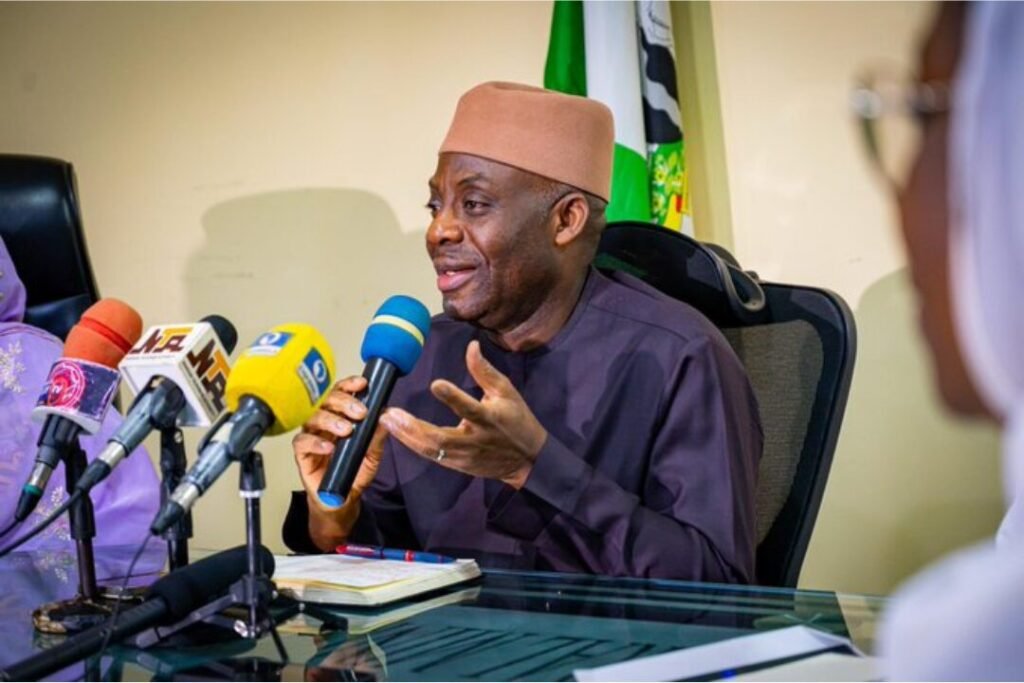
Education Minister Dr Tunji Alausa delivered this sobering message on Tuesday during the inaugural Federal Ministry of Education Private Sector Breakfast Convening in Lagos, where he appealed directly to business leaders and philanthropists to become active partners in resolving one of the nation’s most critical development challenges.
The $345 million annual figure, Alausa explained, is calculated from the current per-child cost required to reach and support the 15 million children who are entirely outside the formal school system. Nationally, 25 per cent of children aged 5 – 14 are out of school. In the North-East and North-West regions, that rate climbs to a devastating 41 per cent.
“Education is the cornerstone of the Renewed Hope Agenda and our ambition to build a $1 trillion economy by 2030,” the minister stated. “If we fail to address this crisis, that goal will remain out of reach.”
While acknowledging some progress under the Nigeria Education Sector Renewal Initiative – including the reintegration of one million children and training of 1,400 Tsangaya teachers for Almajiri education – Alausa stressed that the scale of the problem far exceeds current public resources.
According to the Minister, key ongoing efforts include:
- Disbursement of N10.6 billion to Technical and Vocational Education and Training (TVET) centres, with N3.4 billion paid directly to trainees.
- 1.3 million applications received for TVET programmes, 160,000 students matched, and 72,000 currently enrolled using biometric verification.
- Over N156 billion invested in rehabilitating medical and engineering schools, including N70 billion for laboratories and workshops and N100 billion for new hostels.
- Introduction of a Student Venture Capital Grant offering N50 million equity-free funding to STEMM students, with 65 already shortlisted.
Alausa also announced plans for an international education conference in partnership with the Italian government, targeting $15 billion to support foundational learning in 90 countries.
He urged the private sector to align its resources with national priorities through the forthcoming Education Sector Wide Approach, promising transparent reporting and strong governance. The Global Partnership for Education Multiplier was highlighted as a mechanism that matches private contributions one-to-one with donor funds.
Data presented at the meeting underscored the economic stakes: every additional year of schooling in Nigeria increases future earnings by 5.7 per cent and productivity by 6 per cent.
Minister of State for Education Prof. Suwaiba Ahmad reinforced the message: “Government alone cannot achieve the scale of transformation required. The private sector is a critical partner in driving innovation, expanding infrastructure, and supporting skills development.”
The convening sent a clear and urgent signal: Nigeria’s out-of-school children crisis is not merely an education issue – it is a national development emergency with far-reaching consequences for productivity, social stability, and economic growth. Without decisive, well-funded intervention, an entire generation risks being left behind.
