
Sudanese Return to Khartoum From Uganda
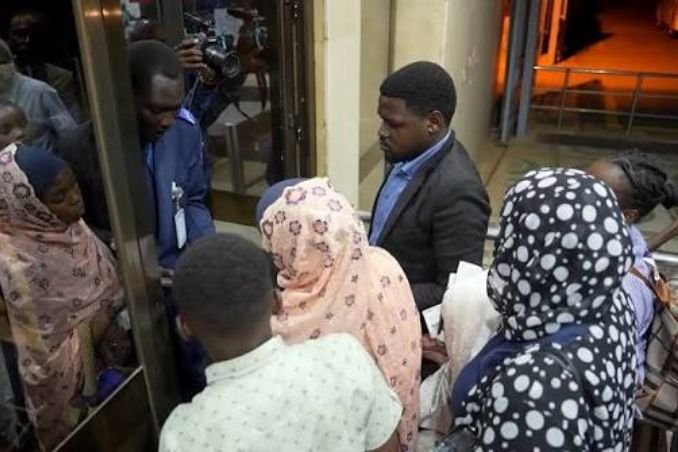
More than 130 Sudanese who fled to Uganda after the war began in April 2023 have arrived in Khartoum on an organised voluntary repatriation flight, officials and footage from the airport showed.
Families left buses at Khartoum International Airport and passed security and health checks before entering the terminal. The flight is one of a series that started in February 2026, first into Port Sudan and then into the capital after the Sudanese Armed Forces said they had retaken Khartoum in March 2025. Sudan’s embassy in Kampala and voluntary-return committees have handled papers, tickets and logistics. Some earlier flights were funded in part by Kuwait and carried about 150 people each. Organisers have spoken of more than 1,300 returnees from Uganda in total.
Mustafa Mohammed, who left with his family more than two and a half years ago, said work in Uganda had not eased a hard standard of living. “Our situation in Sudan was terrible, and we had to leave our country with our family members for Uganda,” he said. “We resided in Uganda and were working, but the standard of living was tough.” Mohammed Adam Abdullah said: “Our homeland is valuable… when everything became okay, we came back to our beloved nation.” Some of those landing are students hoping to pick up courses after universities said they were reopening.
Uganda holds an estimated 92,000 to 96,000 Sudanese refugees and asylum seekers, many in Kiryandongo or in Kampala. The war between the army under Gen. Abdel Fattah al-Burhan and the Rapid Support Forces under Mohamed Hamdan Dagalo has displaced millions inside Sudan and sent hundreds of thousands into Chad, Egypt, South Sudan, Ethiopia, Libya and Uganda. By mid-2026 more than a million Sudanese had come back from neighbouring states, many to Khartoum and Al Jazirah.
Home is not settled. Street fighting in the capital has eased since the army’s 2025 claim on the city, but power, water, clinics and housing are still thin in many districts. Drone strikes and air-defence intercepts were still reported in and around Khartoum and Omdurman in mid-September. Heavy fighting continues in Darfur, Kordofan and parts of Blue Nile. Agencies say people often return to wrecked houses, few jobs and unexploded ordnance.
Uganda hosts more than two million refugees of all nationalities and has faced shortfalls in aid, though it has encouraged voluntary returns where security has improved. Sudanese officials say the airlift answers requests from refugees, with Independent monitors insisting that those returns have to stay voluntary and informed: safety and services are not the same in every state.
More flights from Uganda are expected as the war enters its fourth year. The latest landing is a choice to go home, not proof that the country they left has been put back together.
