
WHO Advances Ebola Vaccine Trials
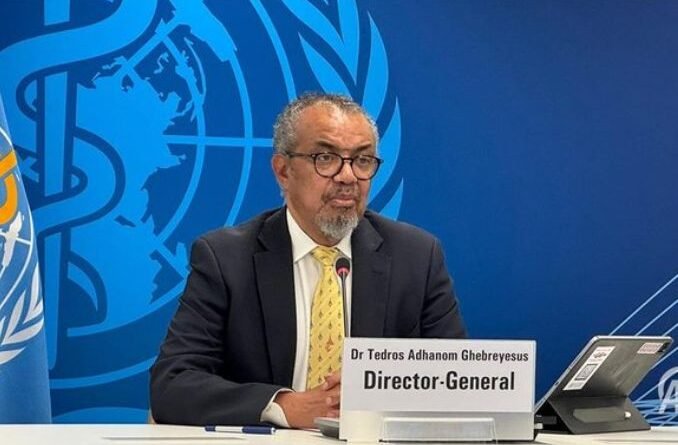
Two vaccines specifically designed against the Bundibugyo strain of Ebola have entered phase-one safety trials in humans for the first time, World Health Organization Director-General Tedros Adhanom Ghebreyesus announced on Wednesday, while recommending that an existing vaccine against the related Zaire strain be tested for possible cross-protection in a phase-three trial as soon as possible.
Tedros told a media briefing in Geneva that the new animal studies of the Zaire ebolavirus vaccine had produced promising evidence of cross-protection. On that basis, WHO is recommending its inclusion in a phase-three study. He stressed that it is not yet known whether the vaccine will prove efficacious against Bundibugyo disease in people, but said the trial represents the most direct route to determining safety and effectiveness for the current outbreak and any that may follow.
In parallel, the WHO-sponsored PARTNERS trial of potential treatments has enrolled its 100th patient, demonstrating that clinical research can be organised rapidly and responsibly even during a complex epidemic. Tedros noted that none of this work is being carried out by WHO, the Congolese government or Africa CDC alone; it depends on coordinated action across partners.
The scientific progress comes against the backdrop of a still-growing outbreak in the Democratic Republic of Congo. Tedros said he had recently visited the country and met President Félix Tshisekedi to assess the response in the northeast. He underlined that interrupting transmission relies on early clinical care and safe, dignified burials – both of which require the trust and active ownership of affected communities. Without that trust, he said, control is not possible.
Financing and operational access remain significant constraints. Of the $518 million needed for the Continental Preparedness and Response Plan, only $264 million has so far been disbursed. Tedros called for funding that is timely, impactful and sustainable, as well as improved security so that response teams can operate safely. He thanked the health workers who continue to risk their lives daily.
In the same briefing Tedros also addressed a separate matter, expressing concern that recent changes to childhood vaccination policy in the United States are not aligned with the best available science. Decades of evidence, he said, have established when children are most vulnerable, when vaccines provide strongest protection, how many doses are required and which vaccines can safely be given together. The current evidence is clear that vaccines, including the MMR vaccine, are safe and do not cause autism. Delaying or unnecessarily separating doses does not increase safety and can leave children unprotected. Policy, he argued, should be guided by rigorous, independent and transparent review of the science.
