
WHO Sees Path to Control Congo Ebola
A senior World Health Organization official has said that the Democratic Republic of the Congo’s deadliest Ebola outbreak on record can still be brought under control within three months if the required resources are secured, even as the epidemic continues to spread rapidly across eastern provinces.
Speaking by video link from Bunia, the capital of Ituri province and the epicentre of the crisis, WHO incident manager Thierno Balde told reporters in Geneva that containment remains achievable. He pointed to early signs of stabilisation in some of the original hotspots around Nizi and Mongbwalu, where intense transmission had been recorded six or seven weeks earlier. “About the next plan for the three months, yes, if you have the necessary resources, I think it will be possible to do that,” Balde said.
The outbreak, caused by the rare Bundibugyo strain, was formally declared on 15 May and designated a Public Health Emergency of International Concern two days later. Genetic sequencing indicates transmission likely began in February, giving the virus a significant head start. Latest figures from Congolese authorities and the WHO show more than 5,000 infections and at least 2,325 deaths (by some counts more than 2,370), across 55 health zones in six provinces. The case fatality ratio stands at approximately 46–47 percent.
These numbers have already surpassed the 2,299 deaths recorded in the 2018–2020 eastern Congo outbreak, previously the country’s worst. Only the 2014-2016 West African epidemic remains larger globally. The current outbreak has advanced at an unprecedented pace, claiming lives at a rate of roughly one every 30 minutes in recent weeks.
WHO Director-General Tedros Adhanom Ghebreyesus struck a more cautious tone at the opening of a second meeting of the International Health Regulations Emergency Committee. “We must be frank: the epidemic is far from being under control,” he said. “It had a big head start, and we are still playing catch-up.” He cited the high proportion of community deaths, ongoing insecurity, population displacement and intense mobility along roads, rivers and mining routes as factors sustaining transmission.
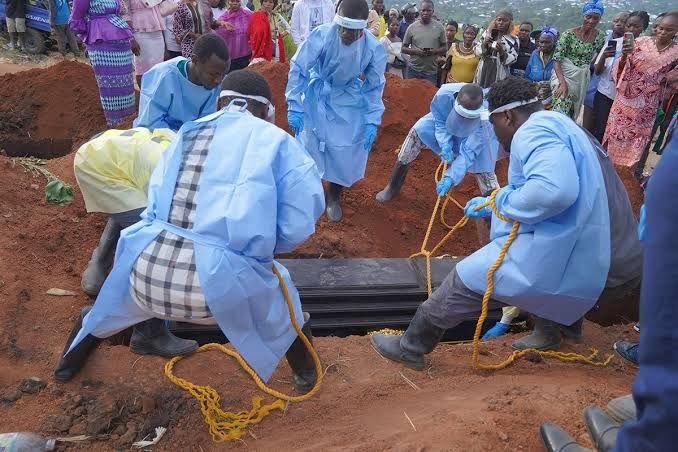
No licensed vaccine or specific treatment exists for the Bundibugyo strain, although two candidate vaccines have entered human trials and a WHO-sponsored treatment trial has enrolled its first 100 patients. Responders continue to rely on contact tracing, isolation, safe burials, infection prevention and community engagement. Balde reported that more than 400 additional treatment beds have been made functional in the past two weeks, extra epidemiologists are being deployed, and motorcycle taxi drivers are being integrated into surveillance networks. Contact follow-up has improved above 85 percent in some areas.
Significant gaps remain, with the WHO seeking $115 million for the immediate response and has secured about 60 percent of that amount. Armed conflict, community distrust, delayed case detection and overwhelmed systems continue to hinder progress. Limited cases have been recorded outside the DRC, including a now-ended cluster in Uganda and individual patients treated in Europe, but the risk of further spread persists. Neighbouring countries have strengthened border checks.
The Emergency Committee is reviewing the public-health emergency status this week. Balde closed his briefing by noting that teams are working day and night despite the difficult conditions. Whether the outbreak can be overtaken in the coming months will depend heavily on whether the requested resources arrive in time.
