
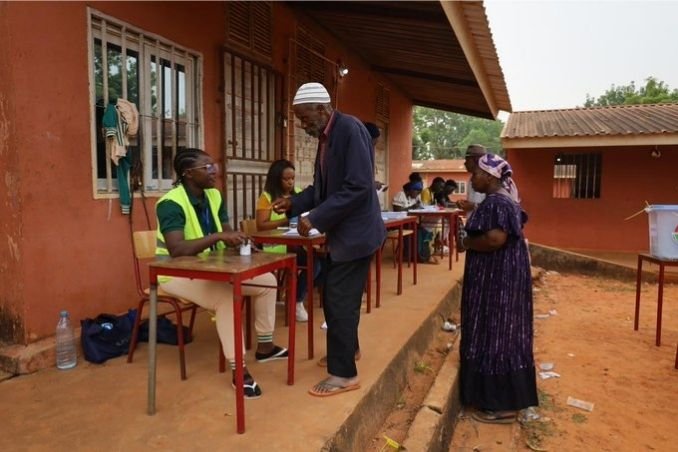
Guinea-Bissau Transitional Authorities Claim Referendum Success
Guinea-Bissau’s military-led transitional authorities have declared a “Yes” victory in Sunday’s constitutional referendum, saying most of those who cast ballots approved a new charter that would concentrate power in the presidency before December elections intended to restore civilian rule.
The National Electoral Commission reported turnout above 55 percent and described the vote as generally peaceful, with no incidents that it said undermined credibility. Official provisional results are due today. National Transitional Council spokesman Alberto Pinto Pereira said projections showed “the victory of the Yes is guaranteed” and that no sovereign body should question the outcome.
Opposition parties and civil society groups that had called for a boycott rejected that assessment. They described participation as extremely low, with some estimates putting it at 5 to 10 percent or even lower, and argued the process lacked legitimacy because the text was drafted by the junta without broad consultation. Heavy morning rain and a muted campaign left many polling stations, especially in the capital, sparsely attended. The commission and the opposition therefore offered sharply different pictures of how many citizens actually voted.
Voters answered a single question: whether they agreed with the entry into force of the constitution already approved by the National Transitional Council. The draft would replace the country’s semi-presidential system with a stronger presidential model. The president would appoint and dismiss the prime minister and cabinet, chair the Council of Ministers, create or abolish ministries, and dissolve parliament in a “grave political crisis.” Parliament would shrink from 102 to 65 seats and electoral constituencies from 29 to 12. Presidential candidates would face new residency and deposit requirements.
Transitional President General Horta Inta-A Na Man, who led the 26 November 2025 coup three days after disputed presidential and legislative elections, presented the changes as a way to end chronic cohabitation conflicts that have produced repeated institutional paralysis. He is barred from running in the 6 December elections. Results of the 2025 vote were never officially published after soldiers seized electoral materials; unofficial tallies that circulated suggested opposition candidate Fernando Dias held a narrow lead over then-President Umaro Sissoco Embaló.
Guinea-Bissau has experienced five successful coups and numerous attempts since independence from Portugal in 1973. The latest takeover added the country to a cluster of West African states under military rule. ECOWAS and the African Union suspended it after the coup. Critics say the referendum was conducted in an environment of restricted campaign freedoms and that the junta lacked the mandate to rewrite the fundamental law.
The electoral commission has urged restraint pending official figures. Whether the result is accepted as a genuine popular mandate or viewed as a managed exercise by an unelected military authority will determine how much legitimacy the next civilian government inherits in a country where institutional fragility has long outlasted any single constitution.
