
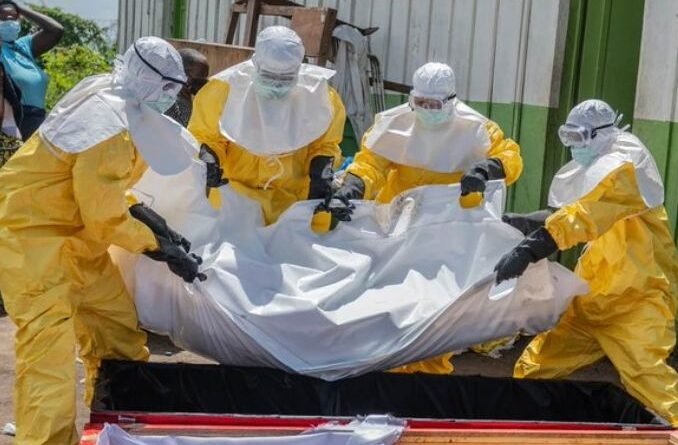
Ebola Toll Tops 2,000 in Congo
The Ebola outbreak in the Democratic Republic of Congo has surpassed 2,000 deaths, making it the country’s second-deadliest on record and one of the fastest-growing epidemics of the disease ever documented, according to national health authorities.
Congolese officials reported 2,011 deaths among 4,381 confirmed cases since the outbreak was declared in May, though evidence indicates the virus had already been circulating for weeks or even months before detection. The epidemic is driven by the Bundibugyo strain of Ebola virus, for which no approved vaccine or specific treatment currently exists. Health Minister Samuel Roger Kamba said the country has not yet reached the peak of transmission but expressed hope that the rate of new infections could begin to decline within the next three months.
A new scientific study has concluded that the outbreak most likely resulted from a fresh spillover of the virus from animals to humans rather than ongoing transmission from any previous epidemic. Researchers identified a previously unrecorded variant of the Bundibugyo virus, reinforcing calls for intensified surveillance of zoonotic diseases that cross from wildlife into human populations. The finding adds to understanding of how the current crisis began and highlights the persistent risk of new introductions in regions where people and animals share habitats.
Health workers continue to confront significant obstacles as they work to contain the outbreak. Insecurity in eastern Congo, fragile health infrastructure, community mistrust of responders, delayed care-seeking and logistical difficulties in remote areas have all hindered efforts. Many patients arrive at treatment centres at advanced stages of illness, contributing to a case fatality rate of approximately 46 per cent. Hundreds of people remain hospitalised or in isolation, while more than 800 have recovered so far.
The scale and speed of the current outbreak have drawn international concern. It has already exceeded the death toll of several previous Congolese epidemics and is advancing more rapidly than the 2014 – 2016 West African outbreak in its early months. Response teams are expanding contact tracing, isolation capacity and community engagement while researchers accelerate work on potential medical countermeasures for the Bundibugyo strain. Officials emphasise that sustained progress will depend on improved security, stronger laboratory networks and greater public trust in the affected provinces, particularly Ituri, which has borne the heaviest burden of cases and deaths.
As the outbreak continues to evolve, health authorities and their partners are intensifying operations in the hope of turning the trajectory downward in the coming months, even as the absence of a specific vaccine or treatment leaves responders reliant on classic public-health measures of isolation, contact management and supportive care.
