
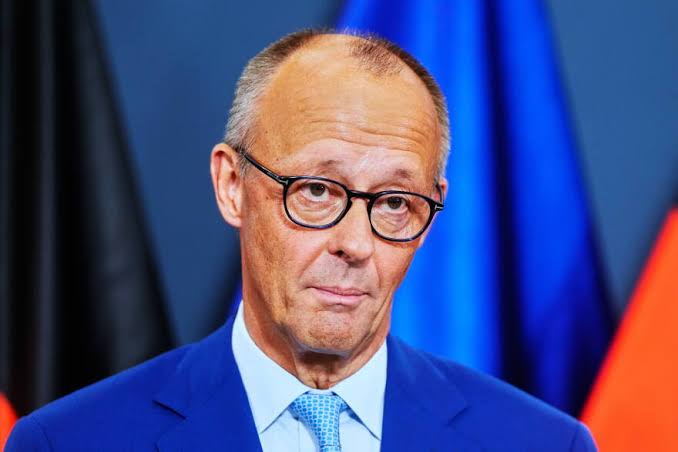
Merz Calls State Votes a ‘Disaster’
German Chancellor Friedrich Merz called his party’s showing in Mecklenburg-Vorpommern a “disaster” after Sunday exit polls put the far-right Alternative for Germany first in that state at 38 percent and the Christian Democrats under the 5 percent line needed to enter the legislature.
Public-broadcaster projections gave the AfD a win in the north-east two weeks after its strongest result yet in Saxony-Anhalt. Merz said the CDU had “fought hard, but in the end it was the CDU that got crushed in the polarization between the Social Democratic Party and the AfD.” He rejected nostalgia as an answer to the economy and to a fractured country. “The answer cannot be to go back to the good old days.”
In Berlin, exit polls put the left-wing Die Linke first at 26 percent, ahead of the CDU and the Greens. Die Linke’s Elif Eralp told a cheering hall: “In our city, love and justice won over hate.” The AfD was projected fourth in the capital at 13.5 percent, up from 9.1 percent in 2023. Groans met the CDU figures at the party’s Berlin watch event.
AfD co-leader Alice Weidel told CNN her party was “clearly the new people’s party in Germany,” had “overtaken the CDU” and that people wanted a change of policy. She called Merz “strongly damaged” and said the Union “cannot continue with Friedrich Merz, with a weak chancellor.”
Until Sunday the CDU’s worst state result in 75 years was 9 percent in Bremen in 1951 – the only previous single-digit score. Saxony-Anhalt, where the AfD took 44 percent a fortnight ago, had already shaken the chancellery.
In Mecklenburg-Vorpommern the AfD campaigned on mass deportations of people without papers, an end to military aid for Ukraine and closer ties with Russia. Its candidate for premier has compared that line to an “America First” agenda. SPD premier Manuela Schwesig, in office since 2017 and the first woman in the post, warned of “dark clouds” and talked jobs, schools and cohesion. Exit polls put the SPD just behind the AfD, at 36.5 percent. About 50,000 people with an immigrant background work in the ageing state, Reuters reports, in an economy short of skilled labour.
Berlin’s campaign turned on rents after a decade of increases and a forecast housing shortfall. The picture there was a left-led city, not an eastern landslide. Official counts will firm the projections.
