
Nigerian Senate Advances Social Media Office Mandate, AI Academy Bills
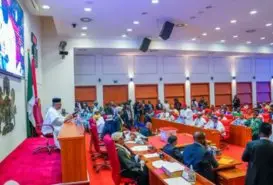
The Nigerian Senate has moved closer to requiring global social media platforms to establish physical offices in the country after stakeholders largely backed the proposal at a public hearing in Abuja on Thursday.
The one-day hearing, organised by the Senate Committee on Information and Communications Technology and Cybersecurity, examined two measures: Senate Bill 648, which would amend the Nigeria Data Protection Act 2023 to mandate verifiable physical offices for social media platforms, and Senate Bill 763, which seeks to establish a national Artificial Intelligence Academy in Omuo-Ekiti, Ekiti State.
Senator Ned Nwoko (Delta North), sponsor of the social media bill, described the legislation as a means to deepen engagement rather than punish platforms. “This Bill is neither punitive nor hostile to innovation. It seeks to deepen their engagement with Nigeria by encouraging them to become true corporate citizens of our country,” he said.
Nwoko noted that countries with smaller digital markets, including Ireland, the United Kingdom, India, South Africa, Singapore and the United Arab Emirates, have attracted significant local operations from companies such as Meta, Google, TikTok and X. Nigeria, as Africa’s largest digital market, should secure comparable benefits in jobs, tax revenue and technology transfer, he argued.
The AI Academy bill is sponsored by Senator Yemi Adaramodu (Ekiti South). Committee chairman Senator Shuaib Afolabi Salisu described both bills as tools to strengthen Nigeria’s digital economy. The social media measure would improve accountability and protection in cyberspace, while the academy would serve as a centre of excellence for AI education, research and innovation.
Senate President Godswill Akpabio, represented by Deputy Senate Leader Senator Lola Ashiru, called the proposals timely and of national importance, stressing that the office requirement aims at greater accountability and investment.
Stakeholders offered predominantly supportive views on the social media bill. Content creators and industry voices highlighted potential gains in local employment, faster dispute resolution, improved consumer protection and corporate social responsibility.
However, the Nigerian Bar Association, the Nigeria Internet Registration Association and other organisations raised concerns that a strict physical-office mandate could prompt some platforms to reduce services or exit the market. The NBA recommended requiring local representatives instead and extending any compliance timeline beyond the proposed 30 days to at least 180 days.
The AI Academy proposal received broad endorsement as a step toward building domestic capacity in a critical emerging field.
Both bills had earlier advanced through second reading. The committee will now review written memoranda and prepare a report for the full Senate. If enacted, the social media measure would place Nigeria among jurisdictions seeking greater local accountability from platforms serving tens of millions of users. Further debate and possible amendments are expected before final passage.
