
Nvidia and LG Group Form Major Partnership to Advance Humanoid Robotics and AI Infrastructure
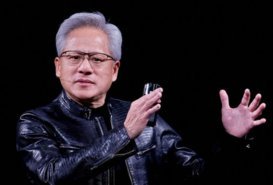
Nvidia CEO Jensen Huang has announced a deepened strategic collaboration with South Korea’s LG Group focused on humanoid robotics development and next-generation data center architecture, marking a significant step in the race toward “physical AI” (artificial intelligence integrated into machines that can perceive, reason and act in the real world).
Speaking today in Seoul after meeting LG Group Chairman Koo Kwang-mo at LG Twin Towers, Huang described the partnership as “growing and building into a spectacular partnership.” The alliance builds on a formal agreement signed the previous day to construct a dedicated AI factory that will serve as the computational foundation for LG’s ambitions in robotics, autonomous vehicles, smart manufacturing and cloud services.
The partnership combines Nvidia’s full-stack accelerated computing platform including its Isaac robotics ecosystem and advanced simulation tools, with LG’s manufacturing scale, motor technology, sensing hardware, cooling systems and energy solutions. LG operates 29 factories worldwide and aims to transform them into AI-powered smart facilities using digital twins, real-time optimisation and synthetic data generation through tools like Nvidia Cosmos.
In robotics, LG Electronics is integrating Nvidia’s Isaac GR00T foundation model – a generalist system for vision, language and action, along with Isaac Sim and Isaac Lab for training and simulation. LG’s home robot CLOiD, already using the Nvidia Jetson Thor chip, has been developed through extensive virtual training. The companies plan to co-develop reference humanoid robots, with LG Innotek providing advanced sensors and optical components. LG CNS will incorporate these technologies into its PhysicalWorks platform for industrial and logistics robots, targeting practical deployment in warehouses and factories where labour shortages are acute.
On the infrastructure side, LG is developing cooling solutions, modular designs and power systems compatible with Nvidia’s AI factory architecture. LG Uplus and LG CNS are planning large-scale AI data centres, while LG Energy Solution is exploring high-voltage systems for next-generation GPUs. The partnership also extends to mobility, aligning LG’s autonomous driving and software-defined vehicle technologies with Nvidia’s DRIVE platform.
LG AI Research is leveraging Nvidia Blackwell GPUs, NeMo and TensorRT-LLM to advance its sovereign EXAONE AI model family, with enterprise applications planned through ChatEXAONE.
The announcement comes during Huang’s visit to South Korea, which also included meetings with other major groups such as SK and Naver. LG shares have risen sharply in recent weeks on expectations of deeper cooperation.Huang praised LG’s expertise in electronics, mechanics, cooling, power systems and construction, noting that South Korea’s relatively modest current AI infrastructure base points to substantial future expansion potential.
