
Ousmane Sonko Transfers Prime Ministerial Duties to Economist Ahmadou Al Aminou Lô
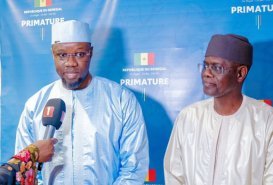
Ousmane Sonko formally handed over the office of Prime Minister to economist Ahmadou Al Aminou Lô on Friday, May 29, 2026 in a ceremony at the Prime Minister’s Office in Dakar, marking a significant leadership shift in Senegal’s young administration under President Bassirou Diomaye Faye.
The transition follows Sonko’s dismissal earlier in the month amid reported policy differences, with the new premier tasked with addressing the country’s pressing economic challenges, including high public debt.
The handover ceremony, attended by government officials, civil servants, and dignitaries, proceeded with an emphasis on institutional continuity and republican values. Sonko, who had served as Prime Minister since April 2024, described the position as demanding and wished success to his successor while highlighting shared national development goals. Lô pledged to advance President Faye’s National Transformation Agenda, focusing on governance reforms, economic stabilisation, and job creation.
President Faye dismissed Sonko on May 22, 2026, leading to the resignation and dissolution of the entire cabinet. On May 25, the president appointed Lô, a 65-year-old independent economist with extensive experience at the Central Bank of West African States (BCEAO). Just days later, on May 26, the National Assembly elected Sonko as its Speaker with 132 out of 165 votes, positioning the influential politician in a key legislative role.
Sonko, a populist opposition figure known for his anti-corruption stance and advocacy for economic sovereignty, played a central part in Faye’s 2024 electoral victory as part of the Pastef movement. His brief tenure as Prime Minister involved ambitious reform efforts but was marked by growing tensions with the president over economic policy, debt management, and governance approaches. These differences contributed to the decision to part ways, though both sides have publicly stressed continuity in serving the nation.
Ahmadou Al Aminou Lô brings a technocratic profile to the role. Born in 1961 in Louga, he holds advanced qualifications in economics and has spent much of his career at the BCEAO, rising to senior positions including national director in Senegal. He previously served as Secretary-General in the government and has expertise in monetary policy, banking regulation, financial markets, and Islamic finance. President Faye cited Lô’s technical knowledge as crucial for tackling Senegal’s debt issues.
The new Prime Minister assumes office at a delicate economic moment. Senegal’s public debt has risen to around 132% of GDP, complicated by the discovery of previously undisclosed liabilities from the prior administration. This led the IMF to freeze a $1.8 billion programme in 2024 over fiscal reporting concerns. Negotiations for a new IMF-supported programme continue, with Lô expected to prioritise debt restructuring, transparency, and unlocking international financing.
Observers note that Lô’s appointment signals a more technocratic approach to economic management, potentially differing from Sonko’s bolder, sovereignty-focused style. However, the smooth institutional transition reinforces Senegal’s reputation for democratic stability in a region often marked by volatility.
The realignment within Pastef raises questions about internal unity. Sonko retains significant popularity, particularly among younger Senegalese, and his new position as National Assembly Speaker gives him a platform to influence legislation and potentially scrutinise executive actions. Analysts view this arrangement as a balance: President Faye maintains executive leadership while keeping a key ally engaged in public life.
The transition occurs against broader expectations from Faye’s administration, which came to power promising systemic change after decades of opposition. Key priorities include job creation, improved governance, and fulfilling campaign pledges on economic sovereignty and social programmes. How effectively Lô’s government delivers tangible results will likely shape public confidence and the ruling coalition’s cohesion in the months ahead.
