
Côte d’Ivoire Summons Niger’s Ambassador Over Tiani’s Accusations of Sponsoring Niamey Airport Attack
The Government of Côte d’Ivoire has formally summoned Niger’s ambassador to Abidjan to protest serious accusations leveled by Niger’s military leader, General Abdourahamane Tchiani.
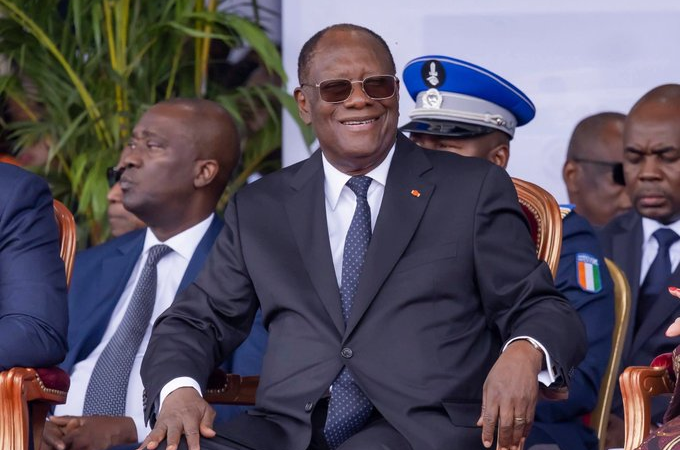
Tchiani implicated Ivorian President Alassane Ouattara in sponsoring the armed assault on Niamey’s Diori Hamani International Airport and adjacent Air Base 101 that occurred in the early hours of January 29, 2026. In a televised address on January 29 following an on-site inspection of the air base, General Tchiani directly accused the presidents of France (Emmanuel Macron), Benin (Patrice Talon), and Côte d’Ivoire (Alassane Ouattara) of backing “mercenaries” behind the overnight attack.
He described the incident as a deliberate act of aggression and destabilization, vowing that Niger would shift from a defensive posture to an “offensive” stance if provocations continued. Tchiani extended thanks to “Russian partners” for their role in repelling the incursion, though no evidence was presented to substantiate the claims against the three West African leaders and France.
The Incident and Aftermath
Niger’s Ministry of Defense reported that security forces neutralized over 20 assailants—including one alleged French national—and detained more than a dozen suspects. The response was characterized as “surgical” and effective, with the Nigerien Armed Forces (FAN) coordinating with allied elements.
Damage included bullet impacts to civilian aircraft fuselages (including an Air Côte d’Ivoire plane), a fire in an ammunition depot, and visible harm to military-side buildings. Authorities confirmed a strategic uranium yellowcake stockpile (approximately 1,000 metric tons, relocated from the northern Somair mine) remained secure and unaffected.
Côte d’Ivoire’s Ministry of Foreign Affairs issued a communiqué describing Tiani’s remarks as “grave” and an “affront to the honor and dignity of President Ouattara and the Ivorian people.” The summoning of the Nigerien ambassador is a standard diplomatic protest mechanism to demand explanations and register strong disapproval. No additional measures- such as reciprocal expulsions – have been announced, but the move signals a sharp escalation in bilateral relations between the two West African neighbors.
The Diplomatic Breaking Point
Relations between Abidjan and Niamey have reached a historical nadir since the July 2023 coup. While Côte d’Ivoire previously provided a battalion for a proposed ECOWAS standby force to restore constitutional order, the recent accusations move the conflict from institutional disagreement to personal criminal allegation. President Alassane Ouattara has historically maintained a “strict legality” stance regarding the Sahel juntas. The formal summons is the highest level of diplomatic protest available before the withdrawal of an ambassador or the complete severance of ties.
Regional & Geopolitical Backdrop
The accusations fit into a pattern of deteriorating ties between Niger’s junta and several ECOWAS member states perceived by Niamey as aligned with French interests. Since the coup, Niger has withdrawn from ECOWAS, formed the Alliance of Sahel States (AES) with Mali and Burkina Faso, expelled French troops, and pivoted toward closer security and economic cooperation with Russia.
France, Benin, and Côte d’Ivoire have been vocal critics of the junta and supported ECOWAS sanctions and diplomatic isolation efforts in 2023–2024. The Niamey airport incident occurred against this strained regional context. Sustained heavy gunfire, tracer rounds, and explosions were reported for one to two hours near the airport and military base.
Nigerien authorities framed it as a foiled terrorist or destabilization attempt, while speculation on social media included jihadist involvement (IS-Sahel or JNIM/Al-Qaeda affiliates), internal military friction, or a security drill. Notably, on January 30, the Islamic State (IS-Sahel) officially claimed responsibility for the assault via its Amaq news agency.
The summoning of the ambassador underscores the fragility of relations within West Africa’s coastal and Sahel zones. Such public finger-pointing risks further inflaming tensions within ECOWAS and could complicate ongoing counterterrorism efforts against jihadist groups operating across porous borders. No immediate military or retaliatory steps have been signaled by Abidjan beyond the diplomatic protest. However, the incident highlights the volatile mix of internal security challenges, geopolitical rivalries, and resource disputes shaping West African dynamics in 2026.
