
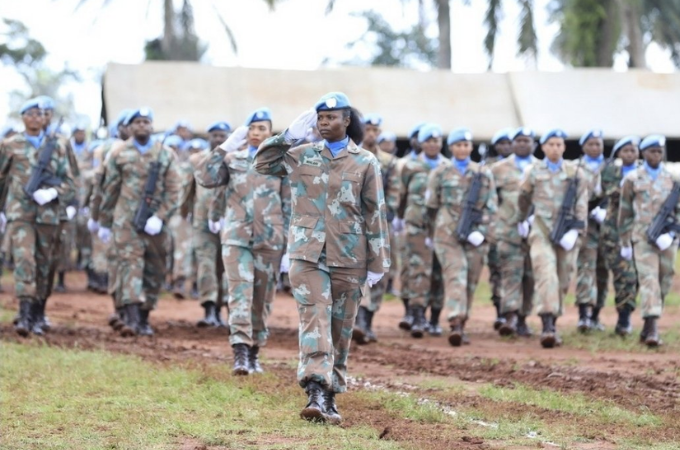
South Africa to Complete Full DRC Military Pullout by December 2026
South Africa has formally begun the process of withdrawing its troop contribution from the United Nations Organization Stabilization Mission in the Democratic Republic of the Congo (MONUSCO), ending nearly three decades of continuous participation in one of Africa’s largest and most complex peacekeeping operations.
President Cyril Ramaphosa notified UN Secretary-General António Guterres of the decision on January 12, 2026, citing the need to realign strained defence resources within the South African National Defence Force (SANDF).
At its peak, South Africa was one of MONUSCO’s top contributors, deploying more than 700 troops. As of early 2026, only just over 70 remain, with full withdrawal scheduled for completion by the end of the year. The phased drawdown is being coordinated closely with the UN to minimize operational gaps in eastern DRC, where MONUSCO continues to face ongoing violence involving armed groups such as M23 rebels and other militias.
The decision reflects long-standing domestic pressures on the SANDF, including chronic underfunding, equipment shortages, and competing national priorities. Analysts and defence experts have largely welcomed the move as a pragmatic acknowledgment of resource realities after 27 years of sustained deployment in one of the world’s most volatile conflict zones. The UN has expressed deep gratitude for South Africa’s sacrifices, while noting the importance of continued support through other means, such as training, logistics, or political engagement.
Africa’s Changing Footprint in UN Peacekeeping
South Africa’s withdrawal from MONUSCO is part of a broader trend among African nations reassessing long-term participation in UN peacekeeping missions. Africa remains the continent with the highest number of UN peacekeepers deployed, but several major contributors have scaled back or exited in recent years due to financial, political, and operational constraints.
Key African-led or African-heavy UN peacekeeping missions currently active include:
-
MINUSCA (Central African Republic): The UN Multidimensional Integrated Stabilization Mission in the Central African Republic, with over 15,000 personnel as of 2026. African countries (Rwanda, Cameroon, Congo-Brazzaville, Gabon, Morocco, and others) provide the majority of troops. Rwanda remains one of the top global contributors overall.
-
MINUSMA (Mali): Although the mission officially ended in December 2023 after the Malian junta requested withdrawal, African nations (Chad, Burkina Faso, Senegal, Niger, Togo) were among the largest contributors during its operation.
-
UNMISS (South Sudan): The UN Mission in South Sudan continues with around 17,000 personnel. Ethiopia, Kenya, and Uganda are among the largest troop contributors, reflecting East Africa’s strong role in regional stabilization.
-
UNISFA (Abyei): The UN Interim Security Force for Abyei (Sudan/South Sudan border area) is led by Ethiopian forces, with over 4,000 troops deployed.
-
MONUSCO (DRC): Even after South Africa’s exit, African nations (Tanzania, Malawi, South Africa until completion, Zambia, and others) remain significant contributors, though the mission itself faces ongoing drawdown discussions due to host government pressure.
These missions highlight Africa’s disproportionate role in UN peacekeeping: African countries consistently provide over 40% of UN peacekeepers globally, often in the most dangerous environments. However, many face similar challenges to South Africa – overstretched militaries, domestic budget constraints, and political pressure to prioritize national security over extended international deployments.
Implications for Regional Stability and UN Peacekeeping
South Africa’s exit from MONUSCO will require the UN to reallocate forces, potentially increasing pressure on remaining African contributors such as Tanzania and Malawi. The mission has long struggled with effectiveness amid complex local dynamics, armed group proliferation, and host government demands for an eventual exit strategy.
The withdrawal also raises questions about Africa’s future role in UN peacekeeping. While countries like Rwanda, Ethiopia, and Kenya continue to lead in troop contributions, financial sustainability and domestic priorities are increasingly shaping decisions. The African Union’s push for greater ownership of peace operations through initiatives like the African Standby Force and the AU Peace Fund reflects a desire to reduce reliance on UN missions while maintaining regional influence.
For now, the UN has expressed appreciation for South Africa’s long service and is working with Pretoria on an orderly transition. The phased pullout is expected to conclude by December 2026, after which South Africa may redirect resources toward domestic defence needs, bilateral security partnerships, or other regional mechanisms.
