
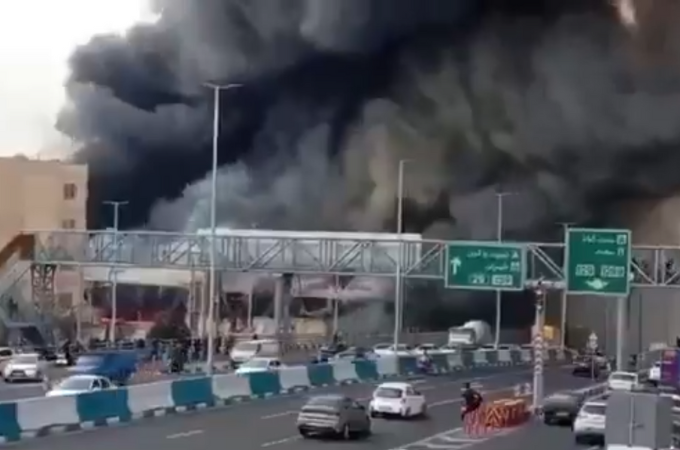
Massive Fire Engulfs Multi-Story Warehouse in Tehran’s Jannatabad Bazaar
A catastrophic fire erupted early Tuesday morning at a multi-story warehouse complex in the Jannatabad Bazaar, situated near the strategic Niayesh Highway in western Tehran.
The blaze, which was visible from several kilometers away, sent towering plumes of thick black smoke across the capital’s skyline, triggering a massive emergency response and snarling morning commutes.
The Tehran Fire Department received the first distress call at approximately 6:00 a.m. local time (02:30 GMT). Eyewitnesses reported seeing intense flames rapidly consuming the upper floors of the commercial-residential structure, which houses dozens of stalls and storage units. Jalal Maleki, the spokesperson for the Tehran Fire and Safety Services Organization, described the fire as “extensive” and confirmed that firefighters from multiple stations were immediately dispatched to the scene.
Explosion Precedes Blaze
Initial reports from the site were marked by accounts of a powerful explosion that preceded the visible flames. Residents in the Jannatabad district described a loud blast that rattled windows shortly before 6:00 a.m. While the cause of the explosion is still under investigation, local authorities are looking into whether the storage of flammable chemicals, lithium-ion batteries, or a gas leak within the crowded bazaar infrastructure played a role.
The Jannatabad Bazaar is a critical hub for local commerce, known for stocking a high density of textiles, household electronics, and plastic goods. The concentration of these combustible materials, combined with what fire officials described as a “highly packed” storage layout, significantly hampered initial containment efforts as flames leaped between adjacent units.
Strategic Response and Traffic Gridlock
The firefighting operation involved over 12 stations and dozens of specialized vehicles, including aerial ladders and chemical foam units. Given the bazaar’s proximity to the Niayesh Highway, one of Tehran’s busiest transit corridors, the Tehran Traffic Police were forced to implement temporary lane closures to allow emergency access. The resulting gridlock stretched back several kilometers, affecting commuters heading into central Tehran.
Firefighters worked for several hours to create a perimeter, successfully preventing the fire from spreading to nearby residential buildings and a bustling market annex. By late morning, the primary blaze was declared under control, though specialized teams remained on-site to dampen “hotspots” that continued to smolder beneath collapsed roofing sections.
Tehran’s Chronic Infrastructure Risk
The Jannatabad incident has reignited a fierce debate over urban safety in the Iranian capital. Tehran’s historic and rapidly expanded bazaars are notorious for aging electrical systems and a lack of modern fire suppression technology. According to recent reports from the Tehran City Council, there are approximately 35,000 buildings in the city currently classified as “unsafe” or “high-risk.”
“This is a wake-up call we have received many times before,” noted a municipal safety inspector at the scene. “Many of these warehouses operate without the necessary permits for hazardous material storage, and our firefighters often face legal hurdles when trying to conduct mandatory inspections.”
While the financial loss is expected to reach billions of rials, the Tehran Emergency Services confirmed that no fatalities or serious injuries occurred. Mohammad Behnia, the operations commander, stated that ambulances treated several individuals for minor smoke inhalation, but no hospitalizations were required.
