
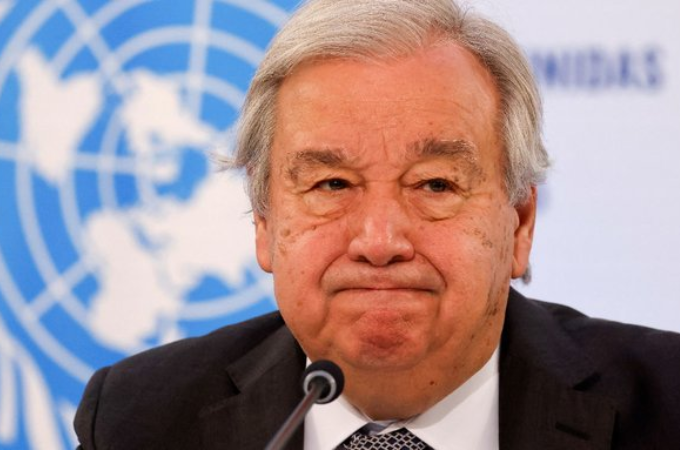
UN Secretary-General Antonio Guterres Warns of ‘Imminent Financial Collapse’ as Unpaid Dues Hit Record High
United Nations Secretary-General Antonio Guterres has issued an urgent warning that the world body faces “the very real prospect of financial collapse” unless member states immediately address a record $1.57 billion in unpaid dues and agree to fundamental reforms of the UN’s outdated financial rules.
In a strongly worded letter sent to all 193 member states earlier this week, Guterres described the crisis as acute and unprecedented. He stated that the organization could run out of cash reserves as early as July 2026 if the situation is not resolved, forcing severe cuts to operations, peacekeeping missions, humanitarian aid, and administrative functions.
The Secretary-General’s appeal comes at a time when only 36 member states had fully paid their regular 2026 contributions as of late January. The UN approved a $3.45 billion core budget for 2026 (a 7% reduction from the previous year), but Guterres warned that even this trimmed budget is at risk without full and timely payments.
Core Problems Highlighted
Guterres identified two main structural issues:
-
Massive Unpaid Dues: Outstanding assessments reached a record $1.57 billion by the end of 2025, the highest level ever recorded. The United States (22%) and China (20%) are the largest contributors, but significant arrears from multiple states have created a liquidity crisis.
-
Antiquated Refund Rule: The UN is required to credit back hundreds of millions of dollars in unspent dues to member states each year. Guterres described this as a “Kafkaesque cycle” in which the organization must return cash it does not actually have, exacerbating the shortfall.
He urged member states to either pay in full or fundamentally overhaul the rules to prevent collapse. UN spokesperson Farhan Haq reinforced the message: “When it comes to paying, it’s now or never. We do not have the cash reserves to keep functioning as we’ve done in previous years.”
The UN80 Efficiency Drive
The budget cuts Guterres referenced are part of the UN80 Initiative, an overhaul launched ahead of the UN’s 80th anniversary. The 2026 budget specifically targeted a reduction of approximately 2,680 staff posts, roughly an 18% cut to the workforce. Key to this strategy is the “Right-Sizing” of duty stations, moving administrative functions from high-cost cities like New York to shared service hubs in Bangkok and Nairobi. Despite these internal efficiencies, the liquidity crisis has worsened because the projected savings cannot be realized without the initial cash flow to fund relocation packages.
Geopolitical Backdrop and Implications
The warning arrives amid heightened scrutiny under the second Trump administration. President Donald Trump has moved to slash U.S. funding and launched his “Board of Peace” initiative, which some experts view as an effort to sideline the UN. Human Rights Watch UN director Louis Charbonneau warned that such moves risk undermining international human rights and the global rule of law.
A financial collapse would trigger reduced peacekeeping, cuts to food and health programs, and staff furloughs. Guterres reiterated that the UN remains essential for addressing climate change and pandemics but warned that without reform, its ability to function is at grave risk. The coming months will be critical as member states debate budget reforms and payment commitments ahead of the next General Assembly session.
