
Beijing Targets “Strong Currency” Status in Renewed Yuan Internationalization Push
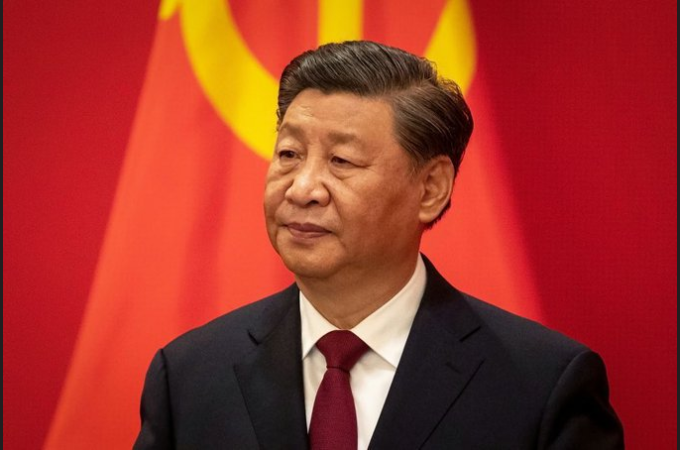
President Xi Jinping has signaled a major strategic pivot in China’s financial ambitions, calling for the development of a “strong currency” to elevate the Chinese yuan (RMB) to global reserve status.
In a definitive essay published on February 1, 2026, in the Communist Party’s flagship journal, Qiushi, the Chinese leader outlined a vision where the yuan eventually rivals established international benchmarks. The address, while avoiding direct naming of the U.S. dollar, clearly targets the reduction of global dependence on the dollar-dominated financial architecture, framing the move as an essential step toward becoming a true “financial powerhouse.”
Xi’s directive emphasizes that a robust currency must be underpinned by world-leading national strength, effective regulation, and “high-caliber financial talent.” This ideological shift comes as Beijing seeks to safeguard its financial sovereignty amid increasing geopolitical friction. By moving the yuan from a primary role in trade settlement toward a broader role in global central bank reserves, China aims to solidify its position as a pillar of a multipolar monetary order.
Why It Matters: Strategic Autonomy and Global Shift
The drive for reserve status is not merely a matter of prestige; it is a calculated effort to insulate the world’s second-largest economy from external financial shocks and sanctions. For global markets, a successful ascent of the yuan would mean a fundamental diversification of liquidity away from traditional Western assets. This transition is expected to lower borrowing costs for China’s partners and reduce the “exorbitant privilege” of the U.S. dollar, potentially altering the dynamics of global trade and foreign policy.
Furthermore, the expansion of the yuan’s role is intrinsically linked to China’s “Belt and Road” and BRICS+ initiatives. By encouraging commodity exporters and emerging markets to settle deals in RMB, Beijing is creating a self-sustaining financial ecosystem that operates independently of the SWIFT network. For investors, this signals a shift toward a world where currency exposure must be managed across multiple, competing reserve hubs.
The Progress of the Renminbi
Tracking Yuan Adoption (2025–2026)
China’s march toward internationalization is evidenced by several key metrics. In 2025, nearly one-third of China’s $6.2 trillion foreign trade was settled in yuan, a record high. The Cross-Border Interbank Payment System (CIPS) now processes an annual volume exceeding 180 trillion yuan, serving nearly 200 direct participants globally. Additionally, as of early 2026, the digital yuan (e-CNY) has transitioned from experimental pilots to a fully embedded component of the banking system, specifically targeted at streamlining cross-border institutional settlements.
The Merchant’s New Calculus
For small-scale exporters like Zhang Wei in Guangzhou, the push for a “strong currency” is felt in the reduction of transaction fees and exchange rate risks. For years, Zhang’s electronics firm had to convert yuan to dollars to trade with partners in Southeast Asia, losing a percentage of every sale to banking intermediaries. “Settling directly in RMB means our margins are protected from the volatility of the dollar,” Zhang notes.
However, the “Human Angle” also reveals the tension of this transition. For international investors, the yuan’s lack of full convertibility remains a primary hurdle. While the government promotes its use, the strict capital controls required to maintain domestic stability often make it difficult for foreign firms to move large sums of capital out of the country. For these stakeholders, the dream of a global yuan will remain secondary to the practical reality of market liquidity and the rule of law.
