
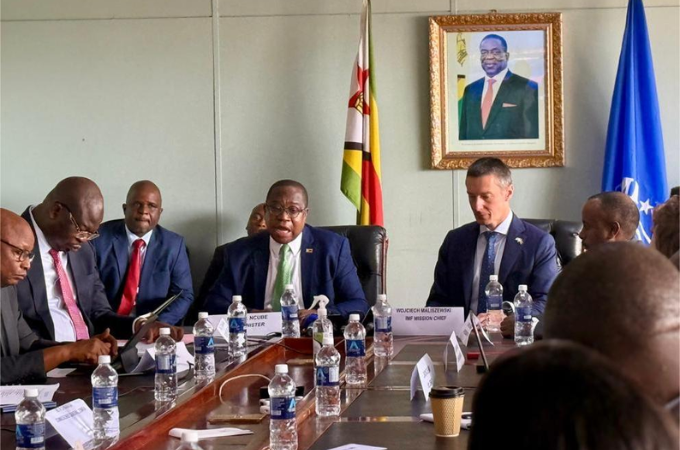
IMF and Zimbabwe Reach Staff-Level Agreement on 10-Month Staff-Monitored Program
The International Monetary Fund (IMF) and Zimbabwean authorities have reached a staff-level agreement on a 10-month Staff-Monitored Program (SMP) designed to lock in recent macroeconomic stabilisation gains, reinforce policy credibility, and support Zimbabwe’s re-engagement efforts toward clearing arrears and restructuring external debt.
The agreement was announced at the conclusion of an IMF staff visit to Harare from January 28 to February 6, 2026, led by Mr. Wojciech Maliszewski. The proposed SMP is subject to IMF Management approval and aligns with the authorities’ National Development Strategy 2 (NDS2).
Key pillars of the program include:
-
Prudent budget execution and stronger expenditure controls
-
Enhanced cash management and short-term liquidity forecasting
-
Sustained monetary discipline to preserve low inflation and promote demand for the Zimbabwe Gold (ZiG) currency
-
Governance reforms, including greater transparency at the Mutapa Investment Fund and operationalisation of the Zimbabwe Social Registry (ZISO) for better-targeted social assistance
-
Continued rebuilding of foreign exchange reserves and improvements in FX market functioning
Economic Context and Recent Performance
Zimbabwe’s recovery continued in 2025, with growth exceeding the initial 6.6% forecast due to strong performances in agriculture and mining, supported by high gold prices and recovering platinum and lithium output. Inflation fell to 4.1% in January 2026, aided by exchange rate stability and tight monetary policy. Fiscal revenues improved through better tax administration and new measures, narrowing the deficit and delivering a small primary surplus.
The 2026 outlook projects growth around 5%, with inflation remaining in single digits and the current account surplus at approximately 3.8% of GDP. The primary fiscal balance is expected to show a surplus of about 0.5% of GDP.
The ZiG Currency – Brief History
The Zimbabwe Gold (ZiG) was introduced on April 5, 2024, as a replacement for the Zimbabwean dollar (ZWL), which had suffered from chronic hyperinflation and loss of public confidence. The ZiG is backed by a basket of foreign reserves (gold and foreign currency) and was initially set at a rate of 1 ZiG = 13.56 ZWL.
The launch aimed to restore monetary stability, curb inflation, and rebuild trust in the domestic currency after years of multi-currency use and repeated currency failures (Zimbabwe dollar reintroductions in 2009 and 2019 both collapsed). Early performance was mixed: inflation fell sharply in 2024–2025, but the ZiG has faced pressure from parallel market premiums, limited FX availability, and persistent external imbalances.
IMF Engagement in Zimbabwe – Failed and Successful Programs in Africa
Zimbabwe’s relationship with the IMF has been turbulent since the early 2000s due to arrears accumulated during the hyperinflation crisis and governance issues. The country has not had a full IMF program since 2001.
Recent attempts include:
-
Failed Staff-Monitored Programs (SMPs): Several SMPs in the 2010s (e.g., 2013, 2019) were agreed but collapsed due to policy slippages, fiscal indiscipline, and failure to clear arrears.
-
Arrears Clearance Strategy: Zimbabwe remains in arrears to the IMF (around $680 million as of late 2025) and other creditors, blocking access to new financing.
In contrast, successful SMPs and programs in other African countries have often paved the way for debt relief:
-
Mozambique (2017–2020 SMP): Helped stabilize the economy post-debt crisis, paving the way for an Extended Credit Facility (ECF) in 2022.
-
Ghana (2023 ECF): A 3-year program after debt default, with strong fiscal consolidation and exchange rate flexibility.
-
Zambia (2022 ECF): First post-debt default program in Africa under the Common Framework, combining fiscal adjustment and external debt restructuring.
These cases demonstrate that SMPs can succeed when accompanied by strong political commitment, credible reforms, and external creditor coordination — elements Zimbabwe is now seeking to replicate under the Structured Dialogue Platform.
IMF Statement Highlights
“We are pleased to announce that the Zimbabwean authorities and the IMF team have reached a staff-level agreement on the key economic policies and reforms that could underpin a Staff-Monitored Program. The proposed 10-month program seeks to consolidate recent stabilisation gains, further strengthen fiscal and monetary policy frameworks, improve foreign exchange market functioning, and advance governance reforms to support stronger and more inclusive growth.” – Wojciech Maliszewski
