
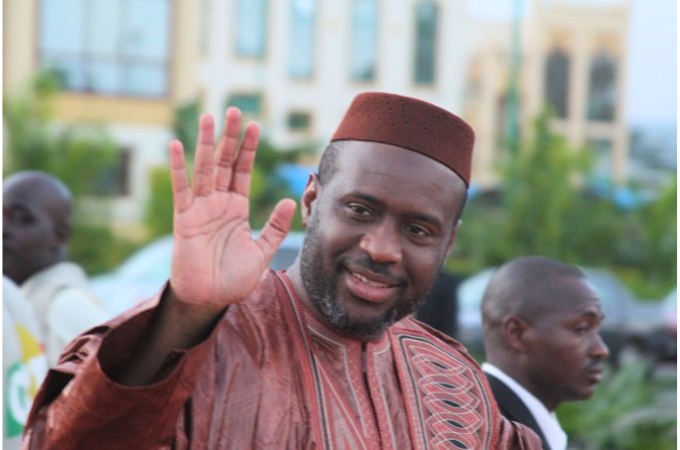
Mali Appeal Court Upholds Former PM Moussa Mara’s 2-Year Sentence for Social Media Post
The Bamako Court of Appeal on February 9, 2026, upheld the conviction and two-year prison sentence (one year suspended) imposed on former Prime Minister Moussa Mara, along with a 500,000 CFA franc fine.
Mara, who served as prime minister from April 2014 to January 2015 under President Ibrahim Boubacar Keïta, was found guilty of undermining the credibility of the state and opposing legitimate authority over social media posts made in July 2025 expressing support for political prisoners.
The case stems from a July 2025 publication in which Mara stated he had met detained political figures and promised them justice. He has been in custody since August 1, 2025. His lawyer has vowed to appeal the decision to Mali’s Supreme Court, indicating the legal process is far from over.
Background: The 2020–2021 Military Coups
Mali has been under military rule since two back-to-back coups in 2020 and 2021. The first coup occurred on August 18, 2020, when Colonel Assimi Goïta and other mid-level officers of the Malian Armed Forces overthrew President Ibrahim Boubacar Keïta amid widespread protests over corruption, economic mismanagement, and the government’s failure to contain jihadist violence.
A transitional civilian government was installed under Prime Minister Moctar Ouane, but tensions persisted. On May 24, 2021, Goïta staged a second coup, arresting Ouane and interim President Bah N’Daw after a dispute over cabinet appointments. Goïta then declared himself transitional president.
The coups led to the withdrawal of French military forces (Operation Barkhane) in 2022. Mali subsequently pivoted toward closer security ties with Russia, welcoming Wagner Group mercenaries (later rebranded as Africa Corps) to assist in counterterrorism operations.
Junta Crackdown on Dissent and Political Opposition
Since consolidating power, the military junta has intensified a crackdown on political opposition, media freedom, and civil society. Key developments include:
-
Dissolution of political parties and suspension of political activities.
-
Arrests and detention of prominent politicians, journalists, and activists.
-
Restrictions on freedom of expression, including prosecutions for social media posts.
-
Expulsion of foreign media outlets and NGOs, including France 24 and RFI.
-
Repeated postponement of promised elections; current transition timeline remains uncertain.
Mara’s conviction fits into this pattern. The former prime minister and leader of the Yelema party has been a vocal critic of the junta’s governance. His July 2025 post was interpreted by authorities as opposing legitimate authority, leading to charges under cybercrime laws.
Foreign Affairs Context
Mali’s junta has pursued a foreign policy of “sovereign assertiveness,” distancing itself from Western partners while deepening ties with Russia, China, Turkey, and some Gulf states. The withdrawal from ECOWAS in January 2024 and the expulsion of UN peacekeepers (MINUSMA) have isolated Bamako diplomatically.
The crackdown on dissent, including Mara’s case, has drawn criticism from human rights organizations and the United Nations, who accuse the junta of authoritarian consolidation. Russia and other partners have remained supportive, framing Mali’s actions as legitimate resistance to external interference.
Mara’s lawyer has indicated the Supreme Court appeal will focus on procedural irregularities and freedom of expression concerns. The case continues to highlight the junta’s intolerance for political criticism as Mali approaches an uncertain political transition.
