
Nasarawa Distributes Nearly 100,000 Textbooks to Transform Rural Education
More than 99,000 textbooks will reach students across Nasarawa State as the government launches its most ambitious educational resource distribution program, targeting over 1,000 primary and nursery schools in an effort to address critical learning material shortages.
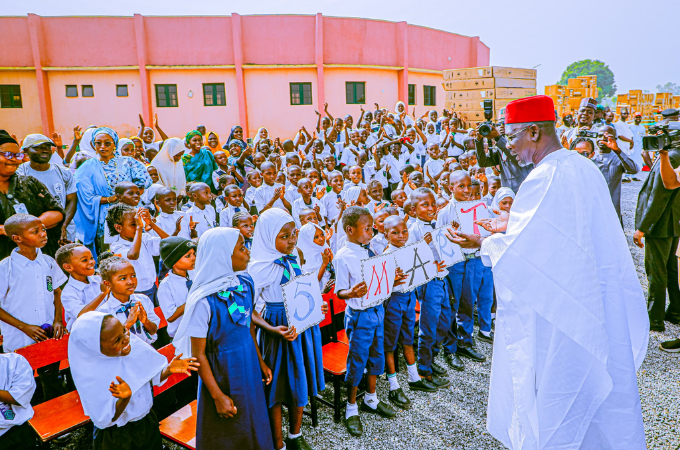
The Nasarawa State Government, working alongside the Universal Basic Education Commission (UBEC), distributed 99,776 mathematics, English, and history textbooks during a ceremony at the UBEC Smart Model School in Lafia on Thursday. The initiative represents a significant investment in elementary education infrastructure across the central Nigerian state.
Governor Abdullahi Sule emphasized the distribution aligns with his administration’s commitment to accessible, quality education for all children. “This gesture demonstrates our unwavering dedication to ensuring every child in Nasarawa State receives the educational foundation they deserve,” Sule stated during the symbolic presentation ceremony.
The educational package extends beyond traditional textbooks. According to Dr. Kasim Muhammed Kasim, Chairman of the Nasarawa State Universal Basic Education Board, the initiative includes 27 smartphones, tablets, and 20 smart interactive television boards for selected schools. Additional learning materials were contributed by the Korea International Cooperation Agency, highlighting international cooperation in Nigeria’s educational development.
UBEC Executive Secretary Hajiya Aisha Garba received recognition from Governor Sule for her collaborative efforts in advancing elementary education quality. The governor assured continued commitment to counterpart funding, essential for sustaining long-term educational improvements.
Principal Ja’afaru Musa of the UBEC Smart Model School expressed optimism that the new resources would motivate both teachers and students toward academic excellence. The ceremony concluded with Governor Sule and management officials inspecting the smart school facilities.
The distribution addresses a persistent challenge in Nigerian education, where inadequate teaching materials often hinder student academic development, particularly in rural and underserved communities.
