







![Hon. Festus Keyamo SAN arrives MMIA past 11:50 p.m. Feb 23 to lead oversight of Terminal 1 fire. Joined FAAN MD & team actively managing situation. Directed morning inspection Tuesday to guide restoration & confirm safety standards. Reaffirmed focus on passenger safety. Story: [link] #KeyamoMMIA #FireIncident #FAAN](https://fullcliphq.com/wp-content/uploads/2026/02/mym-150x150.jpg "MMIA Fire: Keyamo Inspects Lagos Airport After Terminal 1 Blaze Disrupts Flights")

























































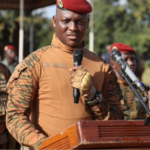





























































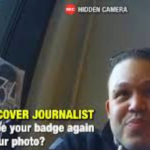





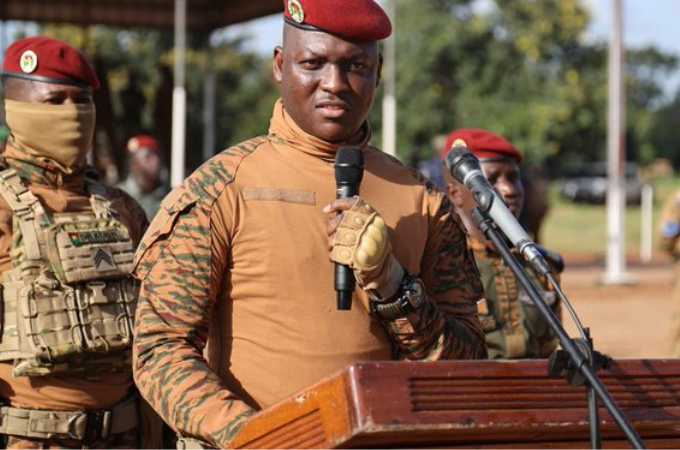
In an unprecedented escalation of its anti-corruption campaign, the military-led government of Burkina Faso has officially deployed “Caméra de Korag,” a specialized unit of civilian investigators equipped with body-worn cameras.
Announced on February 2, 2026, the program aims to provide “indisputable evidence” of administrative bribery by recording interactions within public offices in real time. Under the direction of the Comité d’Orientation et de Suivi de la Lutte contre la Corruption (KORAG), these non-uniformed agents are tasked with infiltrating tax offices, customs checkpoints, and municipal counters to document officials soliciting illicit “facilitation payments.”
The initiative marks a technological shift in Captain Ibrahim Traoré’s “zero-tolerance” policy, moving beyond traditional audits to active, undercover surveillance. According to state media reports, footage captured by these units will serve as the primary legal basis for “radiation” (outright dismissal) and financial sanctions, bypassing lengthy judicial delays. The deployment follows a late-January 2026 special broadcast on RTB (Radiodiffusion Télévision du Burkina), where KORAG officials revealed that nearly 100 cases of systemic malpractice had already been identified through preliminary investigations.
Why It Matters: Real-Time Deterrence vs. Due Process
The “Caméra de Korag” program represents a radical departure from global anti-corruption norms, where body cameras are typically used to monitor police-citizen interactions rather than to entrap civil servants. For the Burkinabè junta, the initiative is a tool for restoring public trust in state institutions and reclaiming revenues lost to embezzlement—funds the government desperately needs for the Patriotic Support Fund to combat ongoing regional insurgencies.
However, the lack of a standardized legal framework for these “citizen-investigators” raises significant concerns regarding privacy and the rule of law. By publishing “name-and-shame” compilation videos without blurring the faces of accused officials, the government is effectively using social media as a public court. Critics warn that without independent judicial oversight, the program risks becoming a tool for political weaponization or personal vendettas, potentially destabilizing the very administrative services it seeks to reform.
Strategic Context: The KORAG Enforcement Mechanism
The Power of the 199 Hotline and Digital Evidence
KORAG’s strategy relies on a multi-channel reporting system that integrates civilian whistleblowing with state-led surveillance:
The 199 Hotline: A National Call Center (composed of the 199 shortcode) allows citizens to report suspected bribe-seeking in real time, often triggering a “Korag” deployment to the site.
Evidence Standards: Unlike traditional witness testimony, body-cam footage is treated as a “material fact” that can lead to immediate administrative suspension.
Institutional Reach: The recent probe has already analyzed over 6,000 diplomas and records within the Presidency, security ministries, and the judiciary, identifying dozens of agents with fraudulent credentials.
The “Grande Surprise” for Public Officials
For the average citizen in Ouagadougou, the “Caméra de Korag” is seen as a long-overdue “big surprise” for corrupt bureaucrats. A viral 8-minute video released by the watchdog account @Aesalerte depicts a municipal officer accepting a mobile-money bribe, complete with the payer covering the withdrawal fee. The visceral public reaction—predominantly cheers for the official’s immediate exposure—highlights a deep-seated frustration with decades of systemic “racket.”
“We used to pay just to get a signature on a birth certificate,” one local resident noted. “Now, they don’t know who is wearing a camera.” Yet, the human cost is also felt by the families of those “shamed” online. With faces broadcast to millions before a formal trial, the social stigma is permanent. For many, this is a necessary “revolutionary” justice; for others, it is a dangerous precedent that erodes the foundational right to a fair defense in a country already struggling with institutional stability.

![Hon. Festus Keyamo SAN arrives MMIA past 11:50 p.m. Feb 23 to lead oversight of Terminal 1 fire. Joined FAAN MD & team actively managing situation. Directed morning inspection Tuesday to guide restoration & confirm safety standards. Reaffirmed focus on passenger safety. Story: [link] #KeyamoMMIA #FireIncident #FAAN](https://fullcliphq.com/wp-content/uploads/2026/02/mym.jpg)