










![Hon. Festus Keyamo SAN arrives MMIA past 11:50 p.m. Feb 23 to lead oversight of Terminal 1 fire. Joined FAAN MD & team actively managing situation. Directed morning inspection Tuesday to guide restoration & confirm safety standards. Reaffirmed focus on passenger safety. Story: [link] #KeyamoMMIA #FireIncident #FAAN](https://fullcliphq.com/wp-content/uploads/2026/02/mym-150x150.jpg "MMIA Fire: Keyamo Inspects Lagos Airport After Terminal 1 Blaze Disrupts Flights")































































































































































































































































































































The Director General of the Manufacturers’ Association of Nigeria (MAN), Segun Ajayi-Kadir, has strongly criticised NAFDAC’s decision to ban sachet and small-volume alcoholic beverages, calling instead for regulation, traceability, labelling, stakeholder collaboration, and targeted access control rather than outright prohibition.
Speaking on Arise News this morning, Ajayi-Kadir acknowledged the shared concern that alcohol consumption by children is wrong and harmful, but argued that banning the product and its sale is a separate and flawed approach. He stated:
“We agree that alcohol consumption by children is wrong but that is a completely different argument from banning the product and sale of alcohol in sachets. It has always been the practice of NAFDAC to ban what they are incapable of controlling.”
He pointed out that many other consumer products—packaged in sachets specifically to reach low-budget consumers—are not banned despite potential misuse by minors. “There are other products packaged in sachets to reach low-budget consumers. So if it happens to be in the hands of the wrong people, what we should do is manage access,” he said.
Regulatory Innovation vs. Prohibition
Ajayi-Kadir referenced a 2025 study conducted jointly by MAN and NAFDAC, as well as recommendations from the National Drug Law Enforcement Agency (NDLEA) and the United Nations Office on Drugs and Crime (UNODC) under an anti-substance abuse programme, all of which favoured restriction of access over banning. He cited successful NDLEA campaigns against drug abuse as evidence that visible, collaborative awareness efforts can change behaviour without eliminating entire product categories.
“If you have not succeeded, it requires you to innovate,” he said. “Those who protested against the ban are not sponsored by MAN; they must be concerned persons whose livelihoods are at risk.”
NAFDAC’s Public Health Rationale
NAFDAC Director-General Prof. Mojisola Adeyeye has consistently defended the ban as a child-protection measure. During a meeting with unions on January 23, 2026, she explained:
“What our own liver can take, the children’s liver may not be able to take it. We are thinking about this in terms of protection and extending a child’s lifespan. Our stand is that we obey those who created the law for us. It is in the interest of public health because the probability that a child who started drinking at the age of 10 will have liver cirrhosis by 40 is very high.”
The agency maintains that sachet alcohol’s affordability, portability, and high unit volume contribute to binge drinking and early initiation among youth, exacerbating public health risks including addiction, liver disease, and related social harms.
Economic & Social Stakes
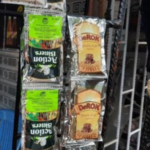
The ban has triggered protests and threats of further action from manufacturers, distributors, retailers, and civil society groups. Unions and CSOs estimate that enforcement could displace up to 5.5 million people across the value chain, from production to small-scale vendors, many of whom are low-income earners, widows, and traders funding family needs and children’s education through sales of sachet alcohol alongside other products.
Ajayi-Kadir argued that banning a product already tested, registered, and periodically renewed by NAFDAC itself raises questions about regulatory consistency and credibility. He noted that no sachet beverage exceeds 43% alcohol by volume—far below claims of 95% sometimes cited in public debate—and called for data-driven traceability, stricter licensing, targeted campaigns, and enforcement against underage sales rather than eliminating an entire affordable product category.
Current Status & Broader Debate
The Federal Ministry of Health and NAFDAC have not issued a direct response to Ajayi-Kadir’s comments as of January 28, 2026. Protesters remain at NAFDAC’s Lagos office, vowing to stay until demands for review are met. The agency continues to enforce the ban, citing public health imperatives, while manufacturers and labour groups push for dialogue and alternative regulatory approaches.
The dispute reflects a broader tension in Nigeria between public health goals and economic realities: protecting children from early alcohol exposure while preserving livelihoods for millions in the informal economy. The outcome could set a precedent for how regulators balance health risks, consumer access, and employment in other low-cost, high-volume product categories.